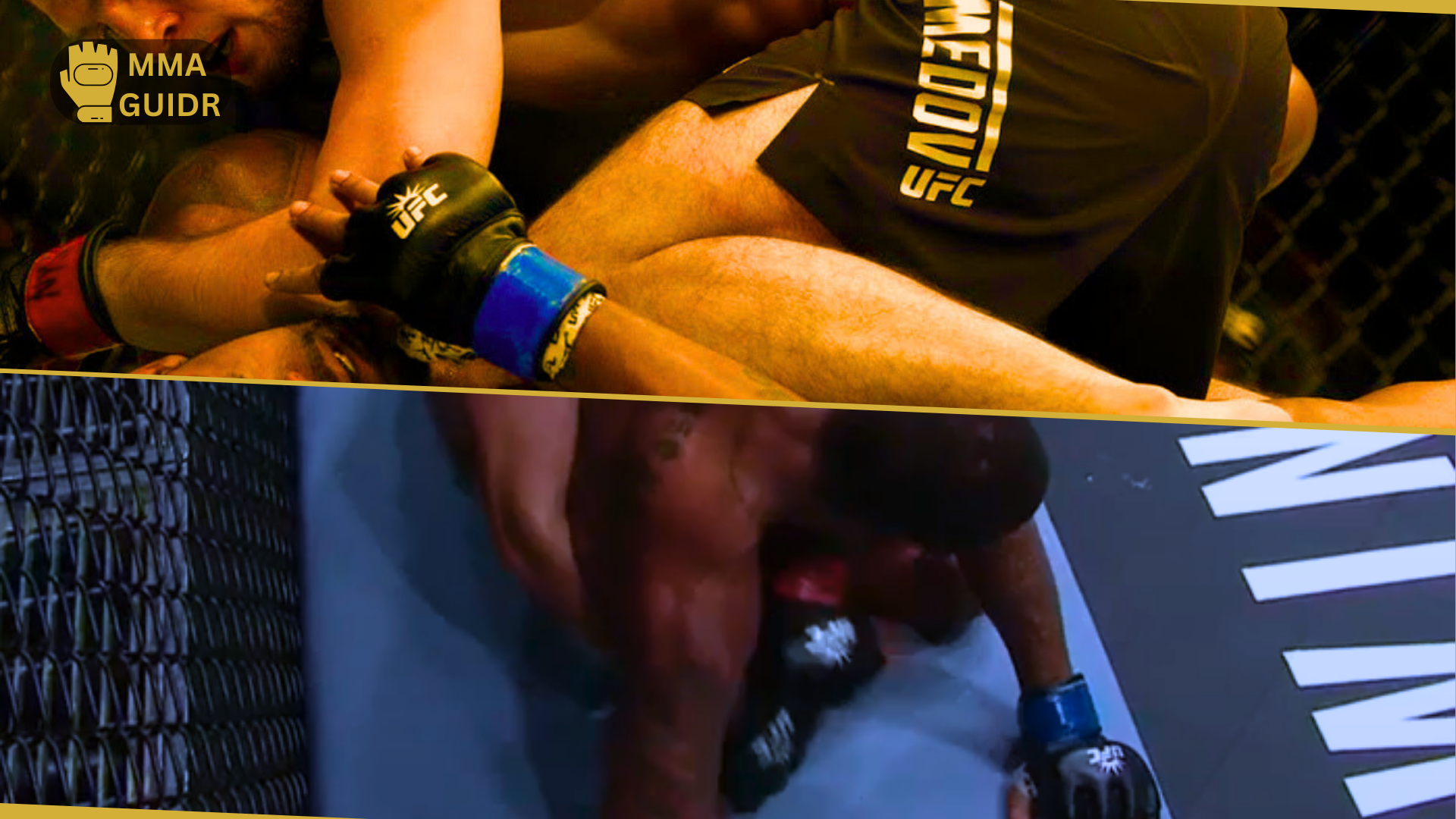
In the high-stakes world of Mixed Martial Arts, few finishes are as iconic—or as devastating—as the armbar. Known formally in Judo as Juji-Gatame (cross armlock), this submission holds a unique place in combat sports history. It was the technique that secured the very first submission victory in the Octagon at UFC 1, and decades later, it remains a staple in the arsenals of world champions. Unlike the brute force of ground-and-pound, the armbar is a triumph of leverage over strength, capable of snapping bone and tearing ligaments in the blink of an eye.
The Anatomy of the Armbar: How It Breaks
At its core, the armbar is a hyperextension technique that targets the elbow joint. The mechanics are deceptively simple but require precise execution to work against a resisting opponent. The attacker isolates an arm, placing it between their legs to control the shoulder and wrist. The attacker’s hips act as the fulcrum, while the opponent’s elbow is the pivot point. By raising the hips and pulling the wrist down, the elbow is forced backward, against its natural range of motion.
For the submission to be effective in MMA, three critical elements must align:
- Control: The opponent’s shoulder must be pinned to the mat or trapped tightly to prevent rotation.
- Isolation: The wrist must be secured with the thumb pointing up (away from the attacker’s chest) to ensure the pressure goes directly into the elbow joint.
- Fulcrum Pressure: The hips must drive upward into the triceps/elbow area, not the forearm or shoulder.
When applied correctly, the pressure on the collateral ligaments and the olecranon process is immediate. In professional MMA, the margin for error is razor-thin; a millimeter of space often means the difference between a tapout and an escape.
The Evolution of the Armbar in the UFC
The history of the armbar in the UFC is a timeline of the sport’s evolution itself. It began with Royce Gracie at UFC 1 in 1993, who used it to submit Jason DeLucia, proving that technique could conquer size. For years, the closed guard armbar was the most feared weapon in the sport. However, as defensive wrestling and submission awareness improved, securing an armbar from the bottom became increasingly difficult.
The “Rousey Era” and Judo’s Influence
The technique saw a massive resurgence with the arrival of Ronda Rousey. The Olympic Judoka didn’t just use the armbar; she weaponized it with an unprecedented level of aggression. Rousey didn’t wait for the fight to hit the ground; she forced it there with Judo throws and transitions that flowed directly into the submission. Her ability to chain throws into armbars created a sense of inevitability, leading to a streak of first-round finishes that defined her title reign.
The Mighty Mouse Masterpiece
If Rousey represented the power of the armbar, Demetrious “Mighty Mouse” Johnson represented its technical peak. His submission of Ray Borg at UFC 216 is widely considered the greatest finish in MMA history. Johnson executed a suplex-to-armbar transition—launching Borg into the air and catching his arm before they even hit the mat. This moment showcased that the armbar in modern MMA is no longer just a static hold; it is a dynamic weapon that can be deployed from anywhere.
Mastering the Technique: Key Setups & Mechanics
In modern MMA, telegraphing an armbar is a recipe for getting smashed. High-level fighters use setups to mask their intentions until it is too late.
The “Spiderweb” Position
The “Spiderweb” is a dominant control position used to finish the armbar when the opponent defends by clasping their hands together. The attacker sits perpendicular to the opponent, hooking the near leg over the opponent’s head and the far leg over their chest. This position allows the attacker to use their free hand and legs to break the defender’s grip while staying safe from strikes.
Mount to Armbar
Transitioning from full mount to an armbar is a classic high-risk, high-reward move. The “S-Mount” variation is particularly effective. By sliding one knee high behind the opponent’s head and the other foot under their armpit, the attacker creates a tight wedge that isolates the arm before they even sit back. This prevents the common “stacking” defense.
Defending the Armbar: Surviving the Snap
Defense is just as sophisticated as the offense. There are two main ways fighters escape the armbar in the Octagon.
The Hitchhiker Escape
This is a last-ditch escape used when the arm is already fully extended. The defender rotates their thumb towards the attacker’s feet and runs their body in a circle around the attacker’s legs. This rotation changes the angle of the elbow, relieving the pressure. It requires extreme flexibility and timing, but when successful, it completely neutralizes the threat.
The Stack
The most common defense involves “stacking” the attacker. The defender clasps their hands to buy time, then drives their weight forward, lifting the attacker’s hips off the mat. This removes the leverage from the fulcrum and forces the attacker to carry the defender’s entire body weight, often breaking the hold or opening a path to pass the guard.
Statistical Impact in the UFC
Despite the rise of chokes like the Rear-Naked Choke and Guillotine, the armbar remains statistically significant. It consistently ranks as the third most common submission in UFC history, accounting for approximately 12-14% of all tapouts. While its frequency from the closed guard has diminished, its success rate from chaotic scrambles and top positions remains high, proving its versatility across eras.
Famous Armbar Specialists
- Antonio Rodrigo Nogueira: The heavyweight legend who submitted giants like Bob Sapp and Mirko Cro Cop.
- Charles Oliveira: The UFC submission king uses the armbar as part of his deadly chain-wrestling attacks.
- Frank Mir: Known for breaking Tim Sylvia’s arm, proving the devastating consequences of refusing to tap.
FAQ
Is the armbar dangerous to practice?
Yes, but it is safe if practiced with control. The danger lies in “cranking” the submission too fast. In training, partners should tap early, and attackers should apply pressure slowly.
Can you do an armbar from a standing position?
Yes, this is known as a “Flying Armbar.” It is a spectacular but risky move that involves jumping and latching onto the opponent’s arm while in mid-air. It requires high-level athleticism and timing.
What is the difference between an Armbar and a Kimura?
An armbar hyperextends the elbow joint (straightens the arm). A Kimura attacks the shoulder joint by twisting the arm behind the opponent’s back (rotation). Both are joint locks, but they target different mechanics.
How long does it take to learn a proper armbar?
The basic mechanics can be learned in a few weeks, but mastering the setups, control, and finishing details against a resisting opponent takes years of consistent Brazilian Jiu-Jitsu or MMA training.