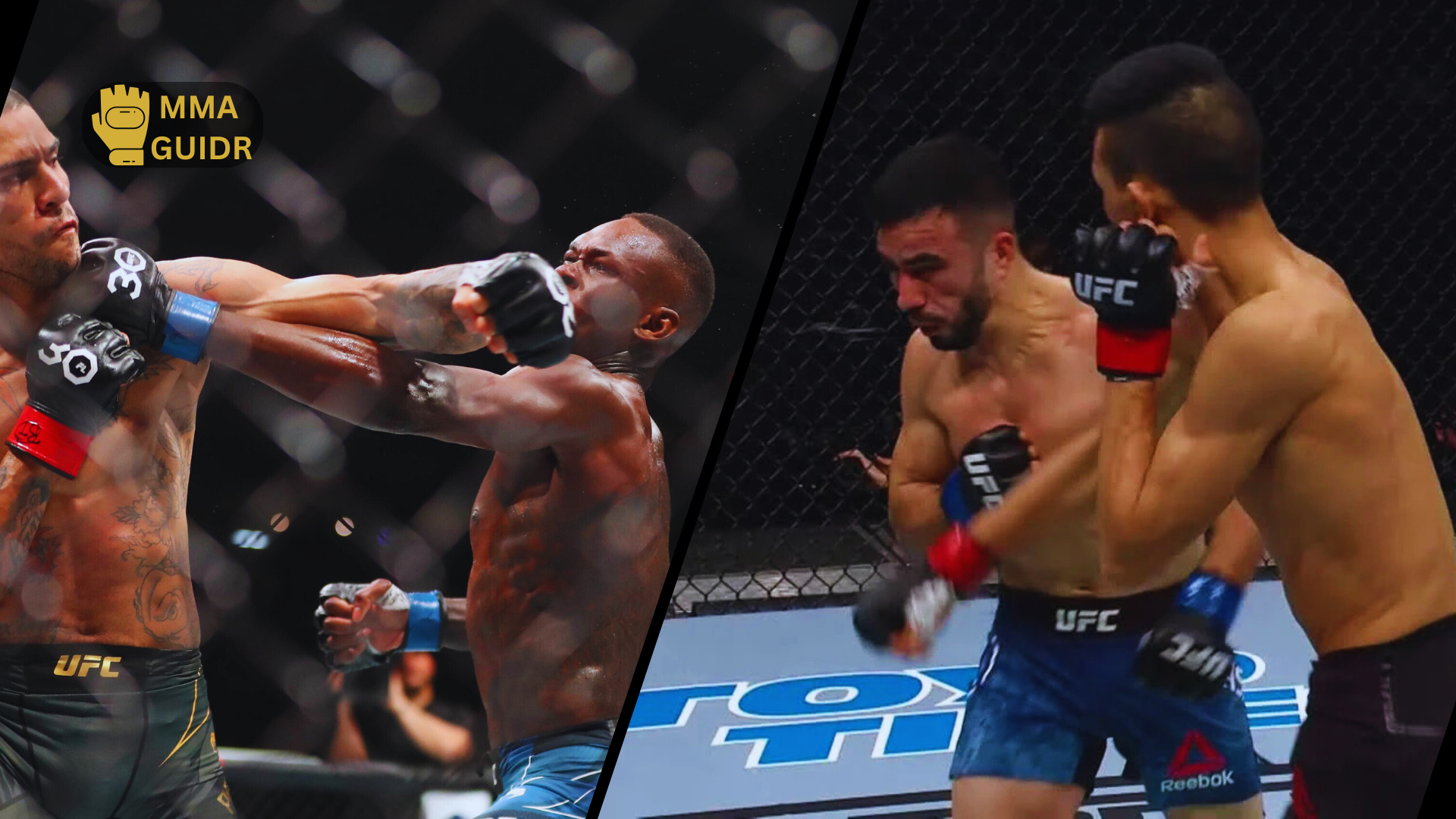
In the chaotic dance of combat sports, aggression is often mistaken for dominance. A fighter marches forward, throwing heavy leather, seemingly in control of the pace. But for the elite counter-striker, this aggression is a gift. It is the fuel for one of the most devastating and aesthetically pleasing techniques in all of fighting: the check hook.
Recall the moment Floyd Mayweather Jr. met Ricky Hatton in the corner during the 10th round of their 2007 super-fight. Hatton, the relentless bulldog, charged in. Mayweather, the matador, didn’t run. He simply pivoted. In a split second, a lead hook connected with the button, and Hatton’s momentum sent him crashing face-first into the turnbuckle. That is the check hook in its purest form.
Whether you are an aspiring amateur climbing the rankings or a fight fan looking to deepen your analytical eye, understanding the mechanics of this move unlocks a new level of appreciation for the “Sweet Science.”
What is a Check Hook?
The check hook is a defensive counter-punch that utilizes an opponent’s forward momentum against them. Unlike a standard lead hook thrown from a stationary position or while moving forward, the check hook is thrown while pivoting away from the opponent.
The name comes from the action of “checking” the opponent—stopping their advance abruptly. It effectively turns the attacker’s aggression into their downfall. By pivoting off the centerline, the striker exits the “danger zone” (the line of fire) while landing a hook that is amplified by the velocity of the incoming rival. It is the combat sports equivalent of a car crash where two vehicles collide head-on, rather than one rear-ending the other.
The “Matador” Principle
Think of a bullfight. The bull (the aggressive fighter) charges in a straight line. The matador (the counter-striker) waits until the last possible second, plants their feet, and spins out of the way, often landing a strike as the bull flies past. In boxing and MMA, the “cape” is the feint or the lure, and the sword is the lead hook.
The Mechanics: How to Throw a Perfect Check Hook
Executing a check hook requires precise timing, elite footwork, and the composure to stand your ground when a punch is flying at your face. Here is the technical breakdown of the movement.
1. The Bait
The technique rarely works if the opponent is stationary. You need them to commit. Top-tier fighters will often back themselves toward the ropes or the cage fence to invite the pressure. This triggers the opponent’s instinct to “blitz” or rush in to cut off the ring.
2. The Lead Foot “Nail”
As the opponent steps into range, your lead foot (left foot for orthodox, right foot for southpaw) acts as a nail hammered into the floor. This is your axis of rotation. You do not step back with this foot; you pivot on it.
3. The Pivot and Strike
This is a simultaneous motion. As you throw the lead hook:
- The Hips: Your hips must rotate violently to generate torque.
- The Rear Leg: Your back foot swings out 90 to 180 degrees, effectively “opening the door” for the opponent to walk through.
- The Impact: The hook lands on the chin or temple at the exact moment you pivot. The opponent walks into the fist, while you spin away from their punch.
4. The Exit
After the punch lands, you should be standing at a new angle—typically perpendicular to where you started. The opponent, carried by their momentum, will often stumble past you, leaving their back or side exposed for follow-up strikes.
Case Studies: The Check Hook in Action
To truly understand the utility of the check hook, we must look at the masters who have applied it under the brightest lights.
Floyd Mayweather vs. Ricky Hatton
As mentioned in the introduction, this is the textbook definition. Floyd Mayweather spent rounds downloading Hatton’s rhythm. He noticed that when Hatton lunged, he dropped his right hand slightly. In the 10th round, Mayweather timed the lunge perfectly. The pivot took him out of range of Hatton’s momentum, and the hook ended the fight.
Alex Pereira’s “Touch of Death”
In the modern era, few possess a more terrifying left hook than current UFC champion Alex Pereira. While “Poatan” often throws his hook with a more upright stance (a signature of his kickboxing background), the principles remain. He often baits opponents into trading in the pocket. When they step in, Pereira pivots slightly or fades back, landing the hook over the top of their guard. His ability to generate power even while moving backward is a rare anomaly in combat sports physics.
Conor McGregor vs. Eddie Alvarez
While Conor McGregor is most famous for his “pull-counter” straight left (a rear-hand counter), his performance against Eddie Alvarez at UFC 205 was a masterclass in lead-hand control and pivoting. McGregor controlled the distance so effectively that every time Alvarez tried to close the gap, he ran into a wall of knuckles. McGregor’s mastery lies in his ability to create angles; he doesn’t just retreat in a straight line, he pivots to keep his opponent constantly resetting.
When to Use the Check Hook (and When NOT to)
Like any tool in the martial arts arsenal, the check hook is situational. Using it at the wrong time can lead to disaster.
Green Light: When to Throw
- Against Aggressive Pressure Fighters: Opponents who plod forward or rush in straight lines are prime targets.
- When Cornered: If your back is against the cage or ropes, the check hook is your escape hatch. It allows you to circle out while dealing damage.
- vs. Opposite Stance: While trickier, a lead hook can loop around the lead hand of an opposite-stance fighter (Orthodox vs. Southpaw) if timed correctly.
Red Light: When to Avoid
- Against Range Snipers: If your opponent is fighting from the outside and not committing their weight forward, a check hook will likely miss, leaving you off-balance.
- If You Lack Footwork: If you cannot pivot quickly, you will end up trading hooks in the pocket—a 50/50 gamble that tactical fighters should avoid.
- Against a High Guard: If the opponent enters with a tight “ear-muff” guard, the hook may hit their forearm. In this case, an uppercut or body rip might be the better pivot counter.
Drills to Sharpen Your Check Hook
You don’t need a sparring partner to start drilling this mechanic. Here are three drills to build the muscle memory required for a lethal check hook.
1. The Cone Pivot
Place a small cone or glove on the floor. Assume your fighting stance with your lead foot next to the object. Practice throwing your lead hook while pivoting around the cone 90 degrees. Ensure your lead foot stays planted (rotating, not stepping) while your rear leg swings wide. Reset and repeat.
2. The Heavy Bag “Bull”
Push the heavy bag so it swings away from you. As it swings back toward you (simulating an attacking opponent), time your pivot. Strike the bag with your hook as you circle out to the side. The goal is to not be there when the bag returns to its starting vertical position.
3. Partner Reaction Drill
Have a partner wear focus mitts. They should move forward aggressively. Your job is not to retreat in a straight line, but to pivot to their outside (blind side) and tap the mitt with your lead hook. Start slow to master the footwork, then increase speed.
Conclusion
The check hook is more than just a punch; it is a declaration of superior ring IQ. It tells your opponent, “I control the space, not you.” From the legendary rings of Las Vegas with Mayweather to the blood-soaked octagons of the UFC with Pereira, this technique remains the ultimate silencer of aggression.
Mastering it requires patience. It requires the courage to wait until the bull is inches away before waving the cape. But once learned, it becomes an equalizer that can turn a losing position into a highlight-reel knockout.
Frequently Asked Questions (FAQ)
Is the check hook effective in MMA?
Yes, absolutely. While the smaller gloves and threat of takedowns change the dynamic, the check hook is highly effective in MMA for circling off the cage. Fighters like Israel Adesanya and Alex Pereira use it to punish wrestlers who carelessly rush in for takedowns or strikes.
What is the difference between a check hook and a gazelle punch?
A gazelle punch involves leaping forward or upward into the hook to close distance (made famous by Floyd Patterson). A check hook involves pivoting away or backward to create an angle while the opponent comes to you.
Can I throw a check hook as a Southpaw?
Yes. The mechanics are identical, just mirrored. As a Southpaw, your lead hand is your right hand. You will pivot on your right foot and swing your left leg out to the left, moving to your opponent’s outside (if they are also Southpaw) or inside (if they are Orthodox).
Is the check hook dangerous to throw?
It carries risk. If you mistime the pivot, you may get caught with a straight cross while you are on one leg. Additionally, if you do not turn your fist over correctly, hitting the hard skull of an incoming opponent can cause hand injuries (like a boxer’s fracture). Proper wrapping and technique are essential.