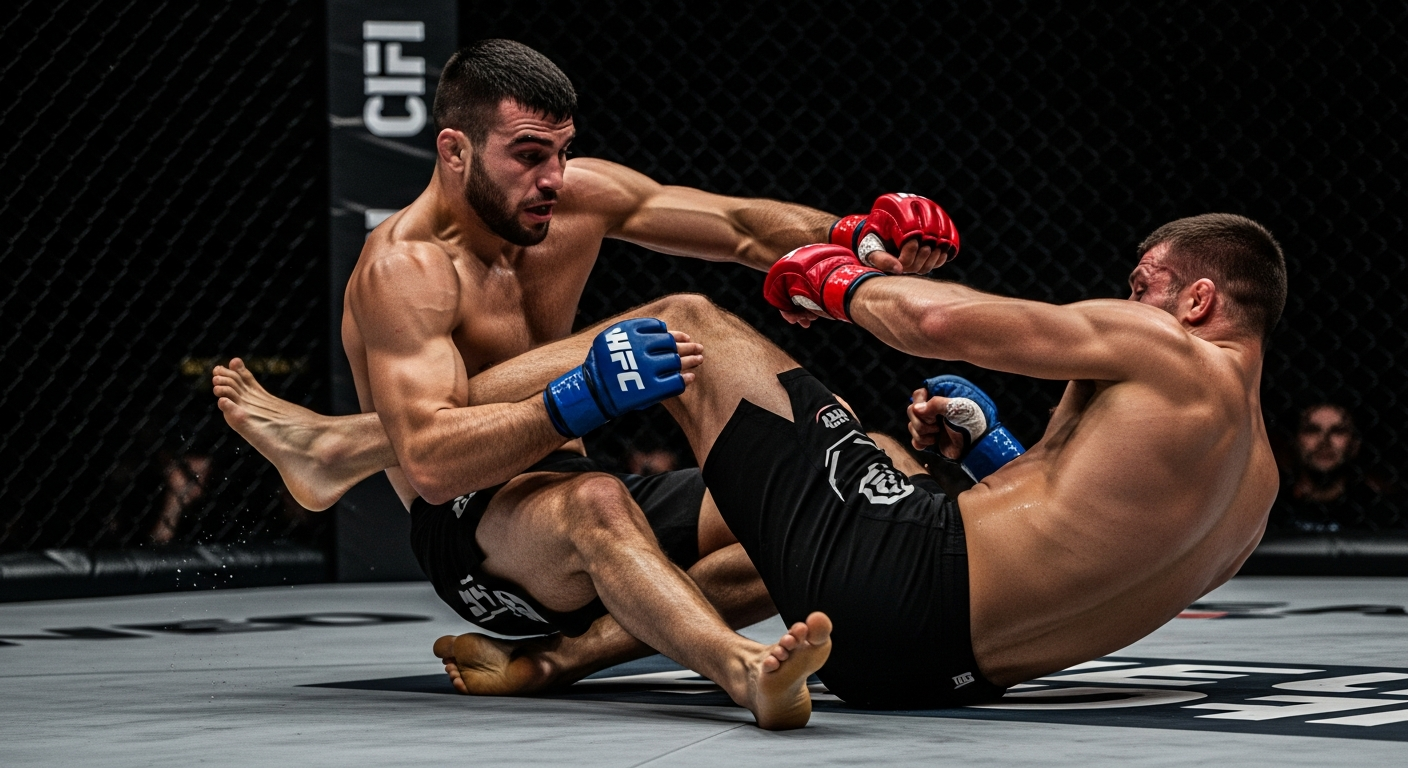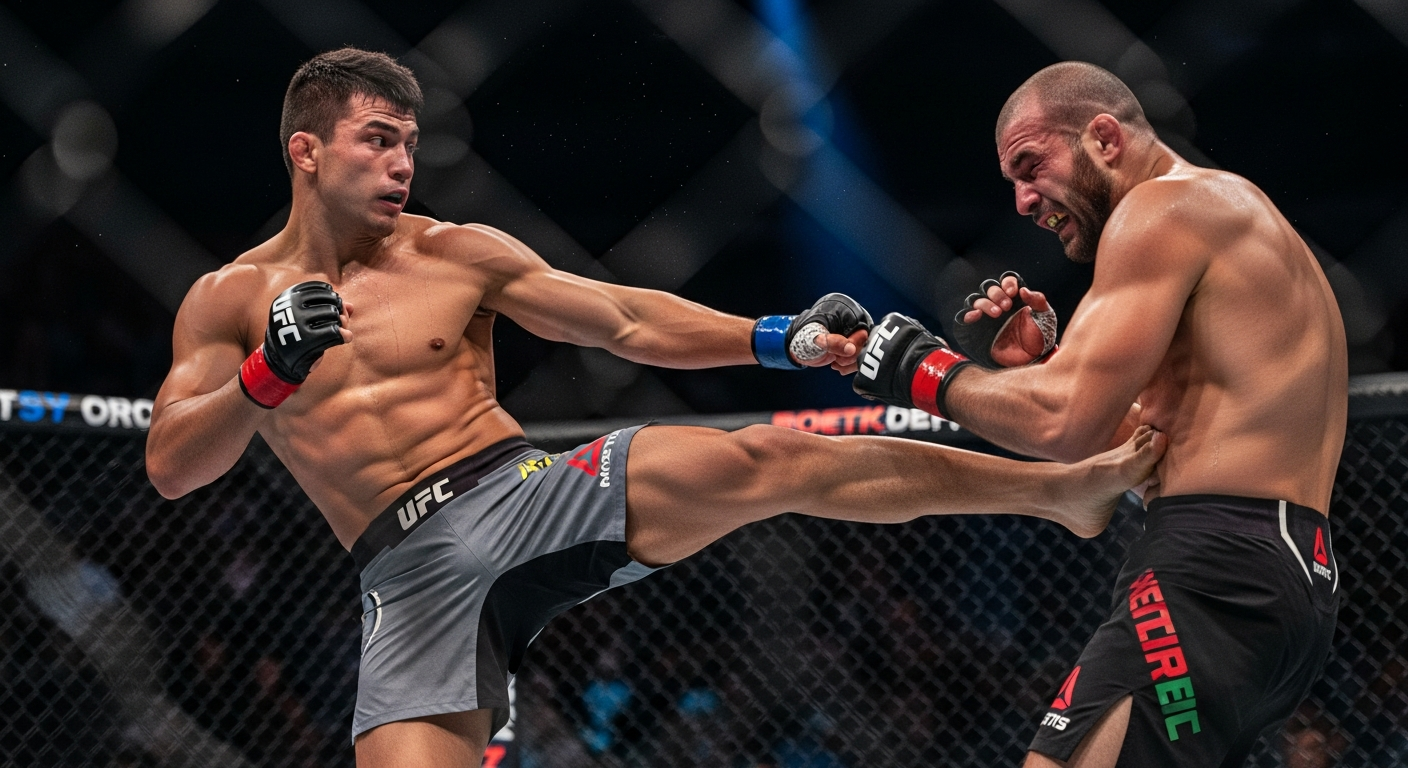
In the high-stakes world of Mixed Martial Arts, the debate between striking bases is as old as the sport itself. On one side, you have the rhythmic, bone-crushing art of Muay Thai—the “Art of Eight Limbs” that turns shins into baseball bats. On the other, the relentless, heavy-handed pressure of Dutch Kickboxing—a style forged in the fires of European gyms that emphasizes boxing combinations finished with devastating low kicks.
For every fighter who flies to Phuket to become “Bangkok Ready,” there is another grinding out 10-round sparring sessions in Breda or Amsterdam. But which style actually translates better to the chaos of the cage?
Is it the upright, tippy-toe stance of the Thai Nak Muay, or the shelled-up, flat-footed aggression of the Dutch Kickboxer? Let’s break down the mechanics, the history, and the data to find the superior striking base for modern MMA.
The Stance: Tall & Tiplike vs. Low & Loaded
The most immediate visual difference between the two styles is the stance. This isn’t just aesthetic; it changes how a fighter defends against takedowns and generates power.
The Muay Thai Stance
Traditionally, a Thai fighter stands tall. Their hips are forward, their weight is light on the front foot (often tapping it to the rhythm), and their hands are high—sometimes even extended in a “Long Guard.”
- The Goal: To be ready to check kicks instantly and launch teeps (push kicks) to manage distance.
- The MMA Problem: A tall, narrow stance with hips forward is a wrestler’s dream. It offers a high center of gravity, making double-leg takedowns much easier to execute.
The Dutch Kickboxing Stance
Dutch kickboxers, influenced heavily by Western boxing and Kyokushin Karate, tend to stand wider and flatter. Their weight is more evenly distributed (often 50/50 or slightly heavy on the lead leg), and they use a “High Guard” (earmuffs) rather than a Long Guard.
- The Goal: To load up heavy punches and remain balanced for rapid-fire combinations.
- The MMA Advantage: The wider base naturally aids in sprawling. However, the heavy lead leg makes them susceptible to the calf kicks that have become popular in recent years.
Verdict: Pure Muay Thai stances almost always need modification for MMA (lowering the hips). The Dutch stance is naturally more takedown-resistant but requires better head movement since the “earmuff” guard is small gloves is less effective than in big gloves.
The Rhythm: The Poker Game vs. The Machine Gun
If you watch a stadium fight in Bangkok, you’ll notice a distinct rhythm. It’s slow, calculated, and explodes in single, heavy collisions. This is the “Poker Game.” Thai fighters often trade single, powerful shots—one kick for one kick. They rely on visual reaction time and composure.
Contrast this with the Dutch style, popularized by legends like Ramon Dekkers. The Dutch rhythm is a “Machine Gun.” The philosophy is built on set patterns, usually a 3-to-4 count combination.
Example: Hook-Cross-Hook-Low Kick.
This volume-heavy approach is designed to overwhelm the opponent’s defense. In MMA, this can be risky. Throwing a 4-punch combo leaves you open to a level change (takedown) in the middle of your sequence. However, when it lands, the damage accumulation is immense.
The “Bangkok Ready” Myth
We cannot discuss this topic without addressing the infamous “Bangkok Ready” meme. The term originated from an Eddie Bravo story about a fighter named Gerald Strebendt, who trained Muay Thai for six months and returned convinced he could out-strike world-class opponents. He was promptly knocked out.
The allure of Thailand is strong. Fighters flock to camps like Tiger Muay Thai or Phuket Top Team, hoping to absorb the magic of the clinch. While the clinch is vital for MMA (specifically for knees and off-balancing), the pure Thai style often lacks the boxing footwork needed to cut off the cage in the UFC.
Fighters who succeed after training in Thailand—like Khalil Rountree Jr.—don’t just copy the Thai style; they adapt the violence of the Thai roundhouse kick into a movement-heavy MMA game.
Case Studies: The Dutch Masters in MMA
While Muay Thai is often cited as the “best” base, history shows that the Dutch adaptation of striking has produced some of the most terrifying finishers in MMA history.
1. Bas Rutten: The King of Pancrase
Before the UFC heavyweight division was what it is today, Bas Rutten terrorized Japan with a style that was distinctly Dutch. He didn’t just kick; he used boxing combinations to set up liver shots that folded opponents instantly. Rutten proved that you could sprawl (defend takedowns) and still maintain high-volume offense.
2. Alistair Overeem: The Ubereem Evolution
Perhaps the greatest example of Dutch Kickboxing in MMA is Alistair Overeem. A K-1 World Grand Prix Champion, Overeem utilized the quintessential Dutch weapon: the Knees. Unlike Thai fighters who clinch tall, Overeem used a frantic, bullying clinch to deliver devastating knees to the body. His ability to mix looping hooks with crushing kicks was a direct product of the Dutch “heavy hands” school.
3. Joanna Jędrzejczyk: The Hybrid Queen
While often associated with Muay Thai, Joanna Jędrzejczyk fought with a rhythm that was undeniably Dutch. She didn’t sit back and wait to counter; she pioneered a high-volume, sprawl-and-brawl style. She would defend a takedown and immediately punish her opponent with a 5-strike combination. She is the blueprint for how to blend the two worlds.
The Modern Meta: Why You Need Both
In 2024 and beyond, the line is blurring. The most successful gyms, like City Kickboxing in New Zealand, teach a hybrid. They use the:
- Feints and Footwork of Western Boxing.
- Low Kicks and Combinations of Dutch Kickboxing.
- Elbows and Clinch Control of Muay Thai.
If you rely solely on Dutch combos, you will get taken down during a flurry. If you rely solely on the Thai stance, you will get blasted by an overhand right or double-legged into the canvas.
For fans tracking the next generation of talent, look for athletes who switch stances. The “Dutch” discipline of drilling combos until they are automatic is what builds knockout power, but the “Thai” conditioning of the shins and body is what builds durability.
Keep an eye on the Latest MMA News to see which style is dominating the current title pictures. Right now, the trend favors those who can punch their way into a clinch—a distinctly Dutch entry to a Thai finish.
Conclusion
So, which transitions better? Dutch Kickboxing offers a safer bridge for MMA fighters because of its emphasis on boxing and a wider base. However, without the weapons of Muay Thai (specifically elbows and knees), a fighter is incomplete.
The days of “Style vs. Style” are over. The winner is the fighter who can punch like a Dutchman and kick like a Thai, all while stopping the takedown.
FAQ: Striking Styles in MMA
Is Dutch Kickboxing dangerous for beginners?
Yes, sparring in Dutch gyms is notoriously hard. The culture emphasizes “hard sparring” to build toughness. Beginners should look for gyms that prioritize technical sparring to avoid unnecessary head trauma early in their training.
Why don’t we see more traditional Muay Thai stances in the UFC?
The traditional Thai stance is too upright for MMA. It leaves a fighter vulnerable to double-leg takedowns. Most Thai specialists in MMA, like Jose Aldo or Anderson Silva, lowered their stance significantly to defend against wrestlers.
Who is the best Dutch Kickboxer in MMA history?
Alistair Overeem is widely considered the most accomplished, having held titles in Strikeforce, Dream, and K-1 simultaneously. Bas Rutten is the pioneer who proved the style’s efficacy in the early days of the sport.
How long does it take to learn Dutch Kickboxing?
You can learn the basic combinations in a few months, but mastering the timing and “flow” takes years. Unlike Muay Thai, which relies on reaction, Dutch style relies on ingrained patterns that must become muscle memory.
What is the “Dutchie” drill?
The “Dutchie” is a common training drill where fighters trade 3-for-3 or 1-for-1 combinations back and forth with a partner at a high pace. It builds cardio, defense, and the ability to fire back immediately after absorbing a shot.