In the high-octane world of Mixed Martial Arts, spinning heel kicks and flying knees often dominate the highlight reels. Yet, ask any championship-level coach about the most critical tool in a fighter’s arsenal, and the answer is almost universally the same: the jab. It is the first line of defense, the primary range-finder, and, as history has proven, a weapon capable of altering the entire trajectory of a fight. From Georges St-Pierre’s orbital-breaking dominance to Kamaru Usman’s piston-like power, the jab has evolved from a basic boxing fundamental into a sophisticated MMA necessity.
Unlike in boxing, where large gloves allow for a high guard and defensive shelling, the 4oz MMA gloves change the physics of the strike entirely. The margin for error is razor-thin, and the threat of a takedown forces fighters to adapt their mechanics. This guide dives deep into the science of the MMA jab, analyzing how it differs from the squared circle and how elite fighters use it to control the cage.
The Anatomy of an MMA Jab: It’s Not Just Boxing
While the biomechanics of throwing a straight lead punch remain similar across combat sports, the context in MMA drastically alters its execution. In traditional boxing, a fighter can stand in a bladed stance (side-on) to maximize reach and minimize the target area. In MMA, this stance is a liability.
- The Stance Dilemma: A purely bladed boxing stance exposes the lead leg to devastating calf kicks. MMA fighters must adopt a “squarer” hips-forward stance to check kicks and defend takedowns. This naturally shortens the reach of the jab, requiring better footwork to bridge the gap.
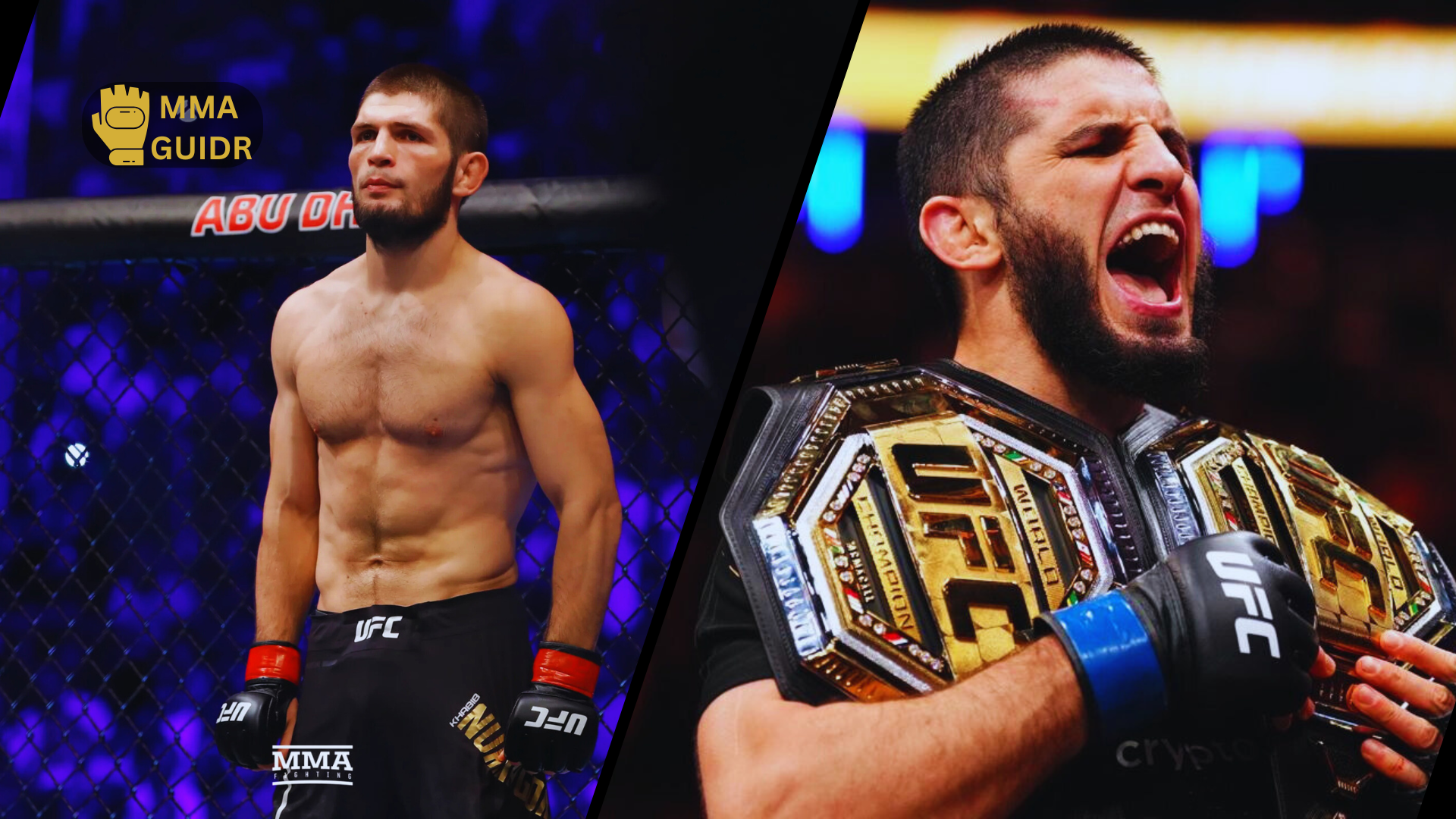
- The Takedown Threat: The level change is the ultimate feint. Elite wrestlers like Islam Makhachev use the threat of a shot to lower an opponent’s hands, opening a clear lane for the jab. Conversely, strikers use the jab to stuff takedown attempts by disrupting an opponent’s forward momentum before they can clasp their hands.
- Small Glove Defense: You cannot “shell up” against a jab in MMA. The small surface area of the gloves allows straight punches to slip through a high guard easily. This forces fighters to rely on head movement (slips), parries, and distance management rather than static blocking.
Strategic Applications: Damage vs. Control
Not all jabs are created equal. In the Octagon, the lead hand serves multiple strategic purposes, often shifting between them in a split second.
1. The “Orbital Breaker” (Power Jab)
The most famous example of the power jab in MMA history occurred at UFC 124, where Georges St-Pierre landed a staggering 55 jabs on Josh Koscheck. GSP didn’t just touch Koscheck; he drove through the target, eventually breaking his opponent’s orbital bone. This stiff jab is thrown with a heavy step, transferring body weight into the knuckles to cause cumulative damage and swell the eyes, blinding the opponent.
2. The Range Finder (Pawing Jab)
Fighters like Max Holloway and Israel Adesanya use a lighter, flickering jab to measure distance. By constantly touching the opponent’s guard, they calculate the exact range needed to land their power shots (crosses and head kicks). While these strikes may not score heavily on the judges’ scorecards individually, they dictate the pace of the fight.
3. The “Piston” (Disruptive Jab)
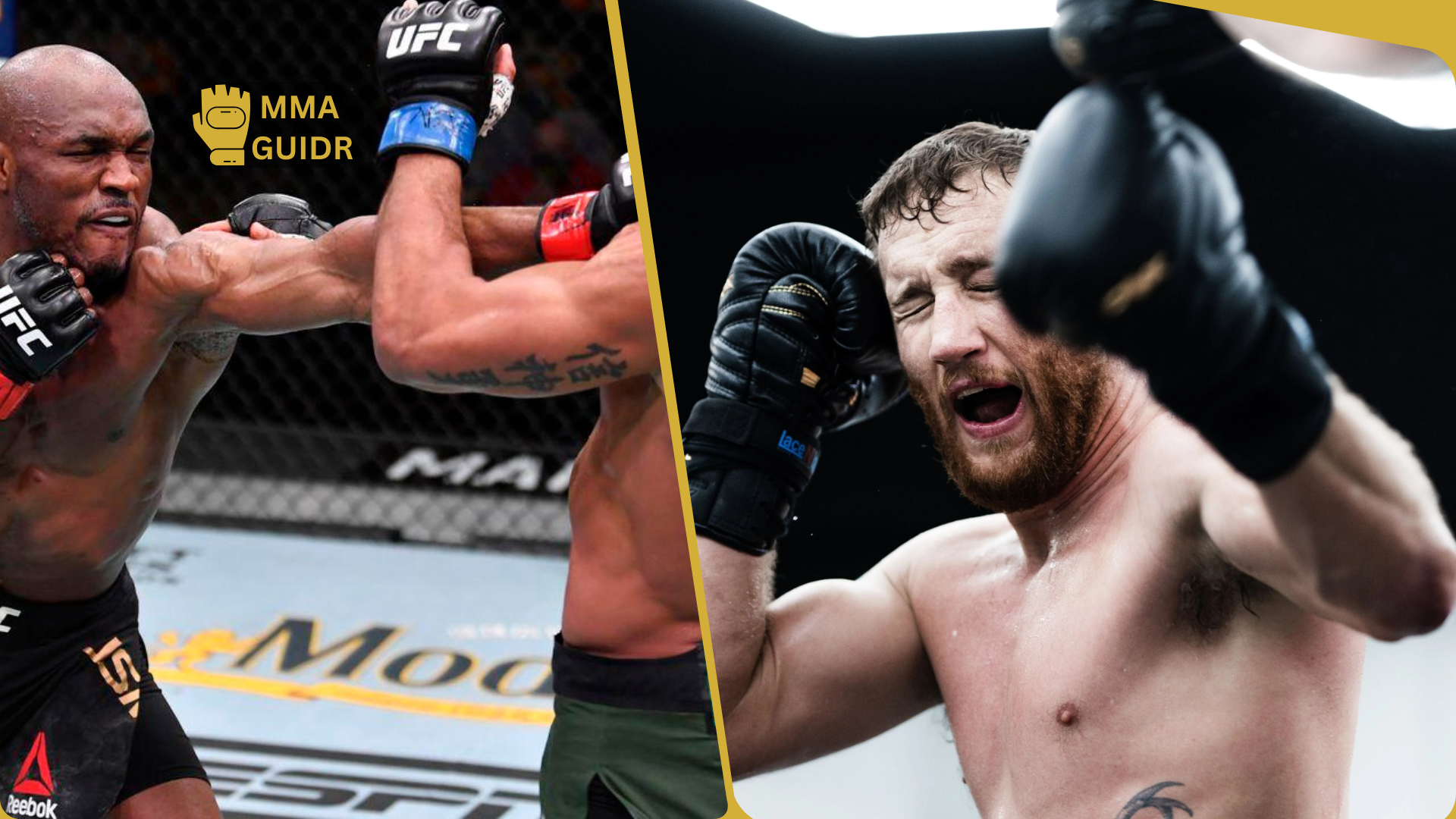
Kamaru Usman revolutionized his striking under coach Trevor Wittman by developing a piston-like jab. Against Gilbert Burns at UFC 258, Usman utilized this strike not just for range, but to drop his opponent. By switching stances between Southpaw and Orthodox, Usman kept Burns guessing, landing the jab flush to the chin with enough force to score a knockdown—a rarity for a lead hand strike.
Defending the Jab: The 4oz Reality
Defending a good jab in MMA is significantly harder than in boxing due to the equipment. Since blocking is less effective, fighters must employ more active defense mechanisms.
- The Parry: Using the rear hand to bat the jab downwards or sideways. This is the most common defense but risks opening the head to a same-side head kick if the opponent feints.
- The Slip: Moving the head off the center line. This is high-risk, high-reward. Slipping to the outside sets up a counter overhand right, but slipping incorrectly can lead to leaning straight into a knee or shin.
- The Leg Kick Counter: As an opponent steps in to jab, their weight transfers to their lead leg. This is the perfect moment to land a low kick, disrupting their balance and power.
Legends of the Lead Hand
To truly understand the effectiveness of the jab, one must study the masters who built their careers around it.
Georges St-Pierre (GSP)
GSP is the gold standard. He learned to jab effectively after his first loss to Matt Serra, realizing that controlling the center line was key to mixing his martial arts. His jab was often a precursor to his legendary blast double-leg takedown, creating a “pick your poison” scenario for rivals.
Sean Strickland
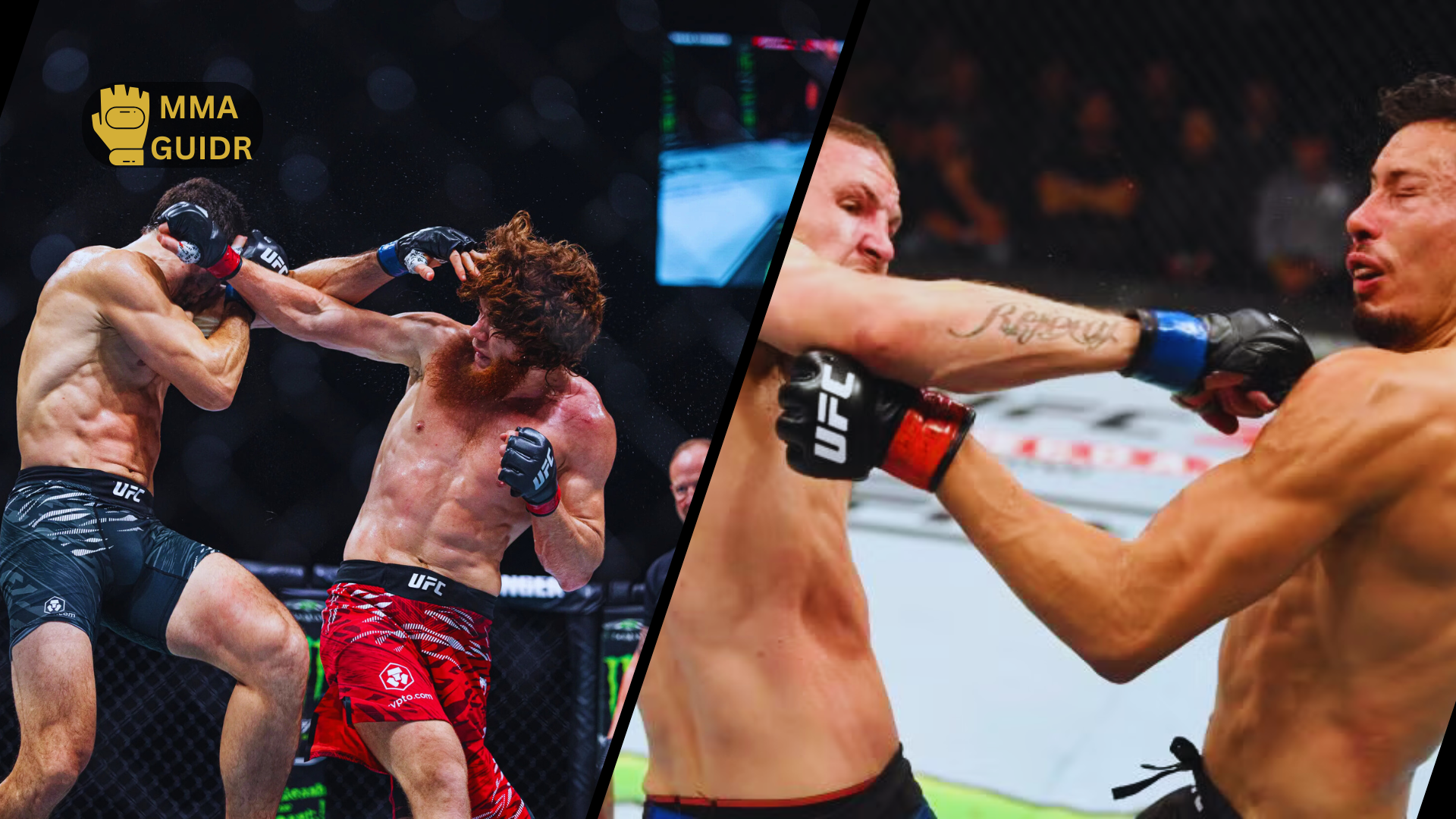
A modern anomaly, Strickland fights with an upright, almost flat-footed stance and utilizes a “Philly Shell” variation. His defense relies on parrying and shoulder rolling, while his offense is almost entirely built on relentless jab pressure. He suffocates opponents not with one punch knockout power, but with volume and cardio, proving that a basic 1-2 combination can still win world titles in the modern era.
Alexander Volkanovski
Despite often being the shorter fighter, the former Featherweight King used his jab masterfuly to negate reach advantages. He would feint level changes to freeze taller opponents, then explode upward with a jab that disrupted their rhythm.
Conclusion: The Foundation of Victory
The jab remains the most underappreciated yet vital technique in Mixed Martial Arts. It requires less energy than a power shot, exposes the fighter to less risk than a kick, and sets the table for every other attack in the book. Whether you are a wrestler looking to close the distance or a striker looking to keep it, mastering the jab is the first step to mastering the sport.
FAQ: Common Questions About the MMA Jab
1. Can a jab knock someone out in MMA?
Yes, though it is rare. A “power jab” or a jab that catches an opponent coming in (adding their momentum to the punch) can cause a knockout or knockdown. Kamaru Usman dropping Gilbert Burns and Anderson Silva dropping Forrest Griffin are prime examples.
2. Why don’t MMA fighters jab as much as boxers?
MMA fighters must be wary of leg kicks and takedowns. Over-committing to a jab or standing in a bladed boxing stance makes the lead leg a prime target for calf kicks, which can compromise a fighter’s movement quickly.
3. How do I improve my jab for MMA?
Focus on footwork and non-telegraphic movement. Practice throwing the jab without “loading” or flaring your elbow. Drill switching between jabbing to the head and jabbing to the body (level changing) to keep opponents guessing about takedowns.