There is a specific sound in a Muay Thai gym that stops everyone in their tracks. It isn’t the smack of gloves or the rhythm of a skipping rope. It is the dull, heavy thud of a shin colliding with a heavy bag—or worse, another shin. To the uninitiated, it sounds like an injury waiting to happen. To a fighter, it sounds like progress.
Shin conditioning is one of the most misunderstood aspects of combat sports. Movies and viral videos have convinced the world that the path to “steel shins” involves kicking banana trees, rolling glass bottles down your legs, or striking metal poles. While these methods make for great cinema, they often make for terrible physiology.
The truth is less cinematic but far more fascinating. It involves microscopic destruction, cellular rebuilding, and a biological principle known as Wolff’s Law. Whether you are a fan trying to understand how Jose Aldo can chop down opponents without flinching, or a practitioner looking to harden your own legs safely, this is the science of how human bone turns into a weapon.
The Science of “Steel”: Wolff’s Law Explained
Your bones are not dead sticks of calcium; they are living, breathing tissue. They constantly break down and rebuild themselves based on the stress you place on them. This phenomenon is defined by Wolff’s Law, a principle developed by German anatomist Julius Wolff in the 19th century.
Simply put, Wolff’s Law states that bone in a healthy person or animal will adapt to the loads under which it is placed. If loading on a particular bone increases, the bone will remodel itself over time to become stronger to resist that sort of loading.
The Micro-Fracture Mechanism
When a fighter kicks a heavy bag, they are creating micro-fractures in the tibia (the shin bone). These are not full breaks, but microscopic fissures in the bone tissue. To the body, this is a signal: “This area is under attack. Reinforce it.”
During the recovery process, the body fills these micro-fractures with calcium deposits. Over months and years of consistent, controlled trauma, the cortical bone (the hard outer layer) becomes denser and thicker. It creates a calcified “shield” over the tibia. This process is why a seasoned Thai fighter can check a kick that would fracture the leg of an average person.
For a deeper dive into the cellular mechanics of this process, you can read about bone remodeling and Wolff’s Law here.
Myths vs. Reality: Stop Rolling Bottles
If you search for shin conditioning on YouTube, you will inevitably find videos of people rolling rolling pins or glass bottles up and down their shins. This is “bro-science” at its worst.
The Glass Bottle Myth
Rolling hard objects on your shins does not increase bone density. Wolff’s Law requires impact and axial loading (force running through the bone) to stimulate density. Rolling a bottle merely crushes the nerve endings and damages the periosteum (the membrane covering the bone).
While this might deaden the pain sensation (nerve desensitization), it does nothing to strengthen the bone structure. The result? You feel less pain, so you kick harder, but your bone is just as brittle as before. This is a recipe for a catastrophic snap.
The Banana Tree Myth
We have all seen the footage of Buakaw Banchamek kicking down a banana tree. Before you run to your local park, understand two things:
- Banana trees are softer than they look: They are fibrous and spongy, similar to a very dense heavy bag, not a hardwood oak tree.
- Buakaw is an anomaly: He has been conditioning his shins since he was a child. Attempting this as a beginner will result in hospital visits, not highlight reels.
The Right Way: Progressive Overload
True conditioning is boring. It takes years, not weeks. The secret is progressive overload—gradually increasing the stress on the bone so it adapts without breaking.
1. The Heavy Bag (The Gold Standard)
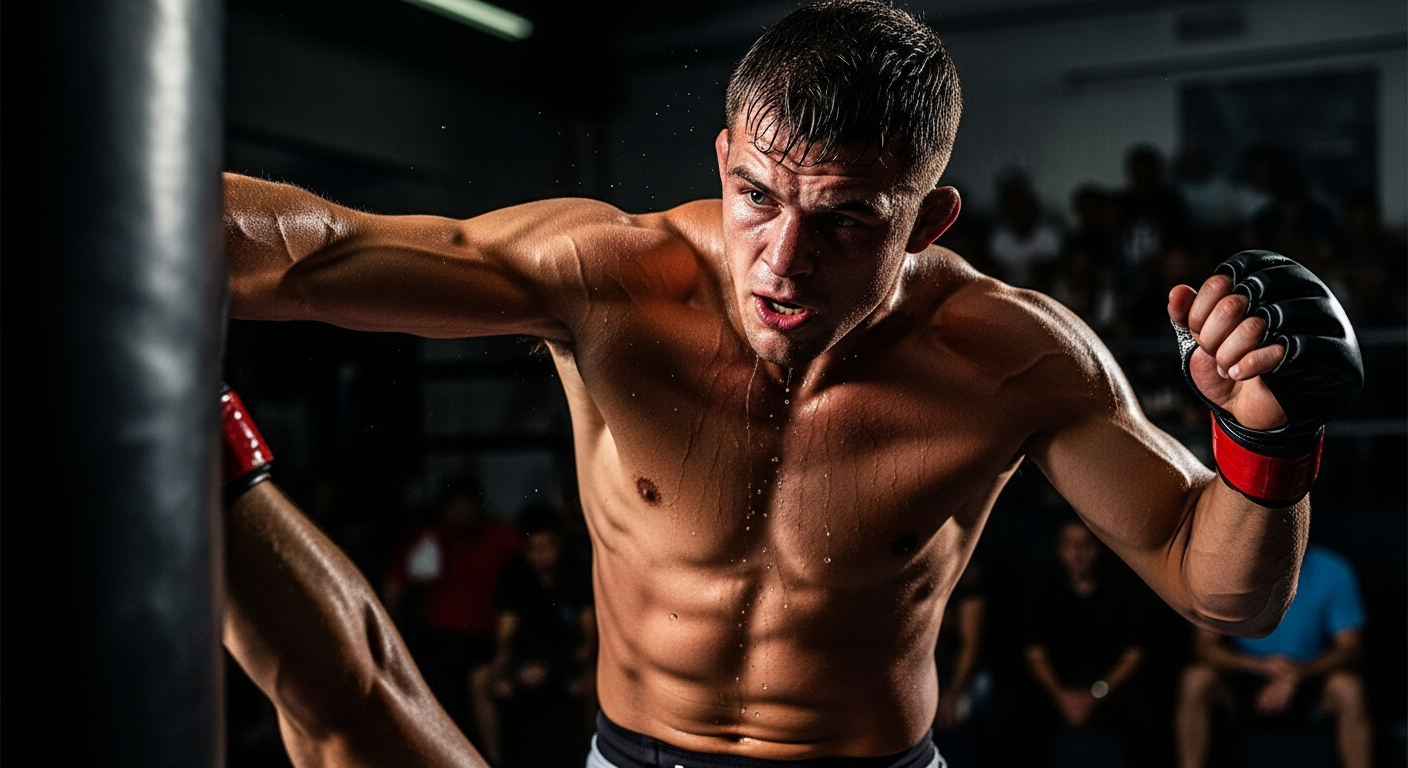
The single best tool for shin conditioning is a classic heavy bag. It offers enough resistance to cause the necessary micro-trauma but is soft enough to prevent injury.
The Protocol: Finish every training session with 50–100 kicks per leg. Focus on technique, ensuring you make contact with the lower-middle part of the tibia, not the foot. Over time, switch to harder bags (sand-filled vs. rag-filled).
2. Running and Skipping
Yes, running helps your shins. The repetitive impact of your foot hitting the pavement sends shockwaves up the tibia, stimulating bone density through axial loading. This is why long-distance runners often have surprisingly high bone density in their legs.
3. Controlled Sparring
Nothing simulates the feeling of shin-on-shin contact like sparring. However, you should not be blasting your partners with full force. Wear shin guards. Even with protection, the impact conditions your legs to the density of human bone.
If you are looking for local gyms or training tips, check out our latest updates on MMAailm.ee.
Case Studies: When It Works and When It Breaks
History has given us brutal examples of shin conditioning gone right and gone wrong.
The Unbreakable: Jose Aldo
The “King of Rio,” Jose Aldo, is perhaps the finest example of offensive shin conditioning in MMA history. In his WEC fight against Urijah Faber, Aldo threw devastating leg kicks that literally disabled Faber’s leg.
But Aldo’s defense is equally impressive. His “checks” (using the upper shin to block an opponent’s kick) are like hitting a bollard. This density comes from a lifetime of chute boxe style training, constantly kicking and checking in the gym.
The Tragedy: Anderson Silva vs. Weidman 2
On the flip side, we have UFC 168. Anderson Silva threw a low kick at Chris Weidman. Weidman checked it perfectly, using the dense upper part of his shin bone against the lower, thinner part of Silva’s.
The result was horrific. Silva’s tibia and fibula snapped instantly. Why? It wasn’t just “weak bones.” It was physics. The force of Silva’s own kick, combined with the immovability of Weidman’s check, exceeded the tensile strength of the bone. It serves as a grim reminder: no matter how conditioned your shins are, physics always wins if the angle is wrong.
Recovery: The Missing Ingredient
You cannot build steel shins if you never let them heal. Remember, the strength comes from the repair process, not the damage.
- Ice: Reduces inflammation immediately after training.
- Calcium & Vitamin D: Essential building blocks for bone regrowth.
- Rest: If you have a palpable dent or sharp, shooting pain, stop kicking. That is a stress fracture waiting to happen.
FAQ
Is shin conditioning permanent?
Not entirely. Like muscle, bone density decreases if you stop using it. If you quit training for five years, your shins will lose some of that “steel” density, though they may remain denser than the average person’s.
Does shin conditioning cause arthritis?
There is no direct link between proper surface conditioning (heavy bag work) and arthritis. However, repeated joint trauma or major fractures can increase the risk of osteoarthritis later in life.
How long does it take to get “hard” shins?
For significant structural change, expect a minimum of 2 to 3 years of consistent training. The nerve desensitization (pain tolerance) happens faster, usually within the first 6 to 12 months.
Is it safe to kick trees like in the movies?
No. Kicking hard objects like oak trees, lampposts, or concrete walls is dangerous and unnecessary. It leads to stress fractures and long-term damage. Stick to heavy bags and pads.