In the high-stakes chess match of Mixed Martial Arts, few moves are as visually striking and devastatingly effective as the Triangle Choke. Unlike the brute force of a knockout punch, the triangle is a weapon of leverage, patience, and geometry. It turns a defensive position—being on your back—into a fight-ending trap. For over three decades, from the early days of Royce Gracie to the modern grappling wizards of 2026, this submission has remained a staple of the Octagon.
Whether you are a new fan trying to understand why a fighter is tapping out while on top, or a practitioner looking to refine your guard game, this guide explores the mechanics, history, and enduring effectiveness of the triangle choke.
Anatomy of a Choke: How the Triangle Works
The Triangle Choke (known as Sankaku-Jime in Judo) is a blood choke that constricts the carotid arteries on both sides of the opponent’s neck. This cuts off blood flow to the brain, causing unconsciousness in seconds if the opponent does not tap.
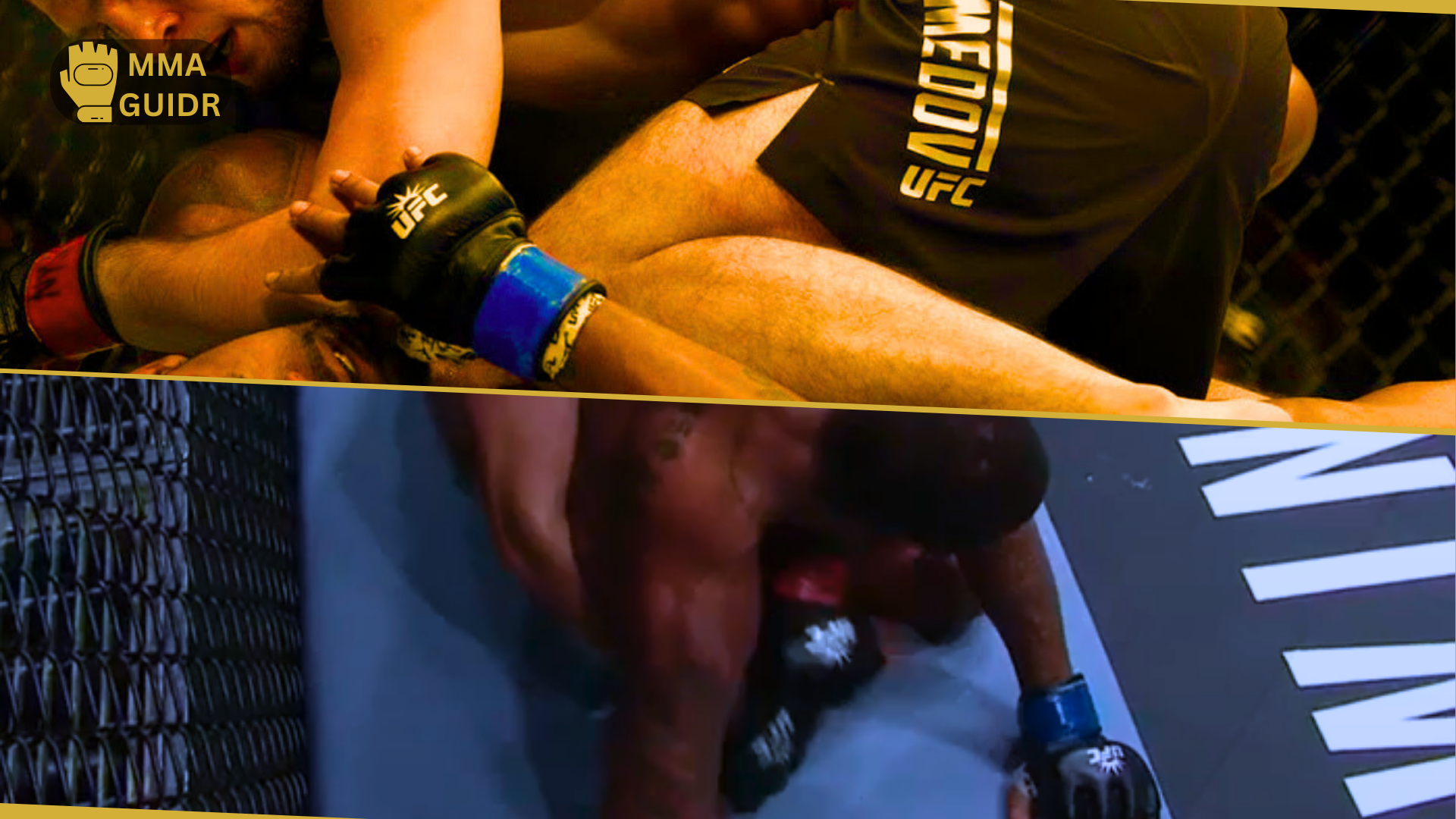
The mechanic is simple yet brutal: the attacker wraps their legs around the opponent’s neck and one arm. One leg goes across the back of the neck, while the other locks over the shin (creating the “triangle” shape). The pressure comes from the attacker’s inner thigh on one side and the opponent’s own trapped shoulder on the other. It is a perfect example of using the opponent’s body against them.
From the Dojo to the Octagon: A Brief History
While the technique originated in Judo and was refined in Brazilian Jiu-Jitsu (BJJ), it became a global phenomenon through MMA. Its evolution mirrors the evolution of grappling in modern MMA, adapting from a pure grappling move to a strike-proof submission.
The Royce Gracie Era
When the UFC launched in 1993, the guard was a mystery to most strikers. Royce Gracie used the triangle choke to submit Dan Severn in UFC 4, proving that a smaller fighter could defeat a massive wrestler from the bottom position. This moment cemented the triangle as a fundamental weapon in the fighter’s arsenal.
Anderson Silva vs. Chael Sonnen: The Miracle Submission
Perhaps the most iconic triangle choke in history occurred at UFC 117. Anderson Silva, widely considered the greatest striker of his time, was being dominated on the ground by Chael Sonnen for four and a half rounds. In the dying minutes of the fifth round, Silva threw up a desperate triangle choke, trapping Sonnen and forcing the tap. It remains one of the greatest comebacks in sports history and highlighted the triangle’s “Hail Mary” potential.
Key Variations Every Fan Should Know
As MMA defense has improved, fighters have developed variations to catch savvy opponents. Here are the three most common forms you will see on a Saturday night fight card.
The Standard Guard Triangle
This is the classic version applied from the full guard (bottom position). It requires breaking the opponent’s posture and isolating one arm. Fighters like Paul Craig and Charles Oliveira have mastered the art of baiting opponents into this trap while absorbing ground-and-pound.
The Mounted Triangle
Applied from the top mount position, this variation is arguably more devastating because gravity is on the attacker’s side. The attacker rolls to their back or stays on top to rain down elbows while the opponent is trapped. It is a favored technique of flexible fighters who can transition from a high mount.
The Inverted (Reverse) Triangle
Often seen in scrambles, the inverted triangle locks the legs on the opposite side of the neck. It has gained popularity with the rise of creative grapplers and allows for attacking the legs and arms simultaneously. While rarer, it is a highlight-reel finisher when executed correctly.
How to Defend the Triangle Choke
Defense is just as critical as offense. The golden rule of defending a triangle is “Posture, Posture, Posture.”
- Head Up: The defender must look at the ceiling to prevent the attacker from breaking their neck alignment.
- Frame Away: Using an arm to create space between the attacker’s hips and the neck prevents the legs from locking tight.
- The Slam (High Risk): Historically, fighters like Quinton “Rampage” Jackson slammed their way out of triangles. However, under modern MMA rules and scoring, slamming can be risky if it results in a head injury or if the choke tightens during the impact.
Is the Triangle Choke Still Effective in 2026?
With the rise of anti-wrestling and heavy sweating making submissions slippery, some critics argue the triangle is becoming harder to secure. Yet, statistics from Tapology show it remains a top-five finisher in the UFC. The threat of a triangle forces opponents to be cautious in the guard, opening up opportunities for sweeps and stand-ups. In the modern era, it serves as both a finisher and a strategic tool to control the pace of the fight.
FAQ
Is the Triangle Choke dangerous?
Yes, it cuts off blood flow to the brain. If a fighter does not tap, they can go unconscious in 5-10 seconds. However, it causes no long-term damage if the hold is released immediately upon unconsciousness.
How long does it take to learn a Triangle Choke?
The basic mechanics can be learned in a few classes, but mastering the setup and finish against a resisting opponent takes years of BJJ training.
Can you do a Triangle Choke with short legs?
Yes, but it requires different adjustments. Fighters with shorter legs often rely on cutting deeper angles or using the “teepee” variation to finish the choke.
Who has the most Triangle Choke wins in UFC history?
Paul Craig is one of the modern leaders in triangle choke finishes, utilizing his unique guard game to submit high-level contenders repeatedly.