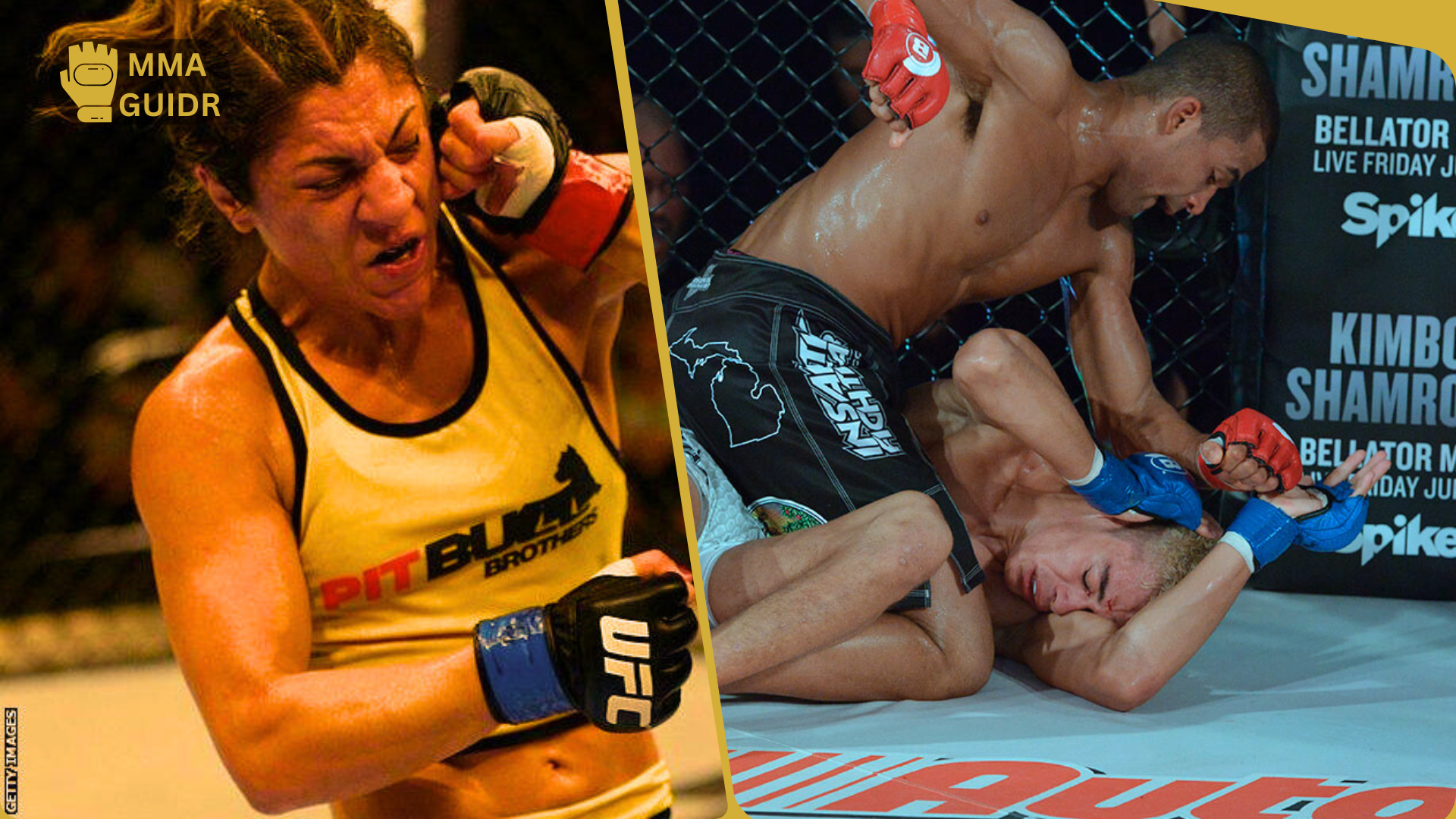
You are sitting in a crowded sports bar, or perhaps on your couch at 4:00 AM, screaming at the television. Your favorite fighter just spent three minutes on top of their opponent, controlling the action, only to hear Bruce Buffer announce a decision for the other guy. “Robbery!” you scream. “The judges are blind!”
But are they? or do you simply not understand the 10-Point Must System?
In the high-stakes world of Mixed Martial Arts, careers are defined by inches and split-second decisions. Yet, the metric used to determine the winner—the scoring system itself—remains one of the most misunderstood aspects of the sport. Whether you are a casual fan, a practitioner, or a sharp bettor looking for an edge, understanding how fights are actually scored is not just useful; it is essential.
This is your expert-level guide to MMA scoring. We are stripping away the myths of “Octagon Control” and diving deep into the Unified Rules of Mixed Martial Arts to explain exactly how three people cage-side decide the fate of a fight.
The Hierarchy of Criteria: It’s Not All Equal
The biggest misconception in MMA is that all actions are created equal. Fans often believe that a takedown is worth a specific number of points, or that moving forward (aggression) automatically wins you the round. This is false. Under the modern Unified Rules of MMA, established by the Association of Boxing Commissions (ABC), scoring is a strict hierarchy. Judges cannot even consider the secondary criteria unless the primary criteria are 100% equal.
1. Primary Criterion: Effective Striking and Grappling
This is “Plan A.” It is the only thing that matters for 90% of scoring decisions. The rules explicitly state that judges must evaluate Effective Striking/Grappling first. But what does “effective” mean?
- Impact is King: It is not about how many jabs you land; it is about how much damage you do. Legal blows that have immediate or cumulative impact (swelling, lacerations, staggering the opponent) are weighed heavier than cumulative volume.
- Effective Grappling: This isn’t just hugging. Effective grappling is defined by successful takedowns, submission attempts, and reversals that produce impact. If a fighter takes their opponent down but does nothing with the position, while the bottom fighter lands hard elbows, the bottom fighter is winning the striking/grappling exchange.
2. Secondary Criterion: Effective Aggressiveness
This is “Plan B.” Judges are instructed to look at this only if they see absolutely no advantage in effective striking and grappling. If Fighter A lands the harder shots, but Fighter B is moving forward, Fighter A wins. Period. Aggressiveness only scores if the damage is dead even.
3. Tertiary Criterion: Fighting Area Control
This is “Plan C,” and frankly, you should almost never see a round scored on this metric. Fighting Area Control (dictating the pace and place of the fight) is the tiebreaker of last resort. If striking, grappling, and aggression are all 100% identical—a statistical anomaly—then, and only then, does the judge look at who is controlling the cage center.
Decoding the Scorecard: 10-9, 10-8, and the Mythical 10-10
The “Must” in the 10-Point Must System means that the winner of the round must receive 10 points (minus any foul deductions), and the loser receives 9 or fewer. But the difference between a 10-9 and a 10-8 can change an entire fight.
The Standard: 10-9 Round
This is the most common score. It indicates a round where one fighter won by a “close margin.” If you edge out your opponent in striking exchanges, or land one solid takedown and do some work, you earn a 10-9. Even if the round was razor-thin, judges are discouraged from scoring it a draw; they must find a winner.
The Game Changer: 10-8 Round
For years, 10-8 rounds were as rare as a double knockout. Judges were terrified to use them. However, recent rule updates have liberalized the 10-8. A score of 10-8 is now required (not just suggested) if a judge sees Dominance, Duration, and Impact.
- Dominance: The losing fighter was in a defensive shell and offered no offense.
- Duration: The dominance lasted for a significant portion of the round.
- Impact: The winner inflicted visible damage or submission threats.
If a fighter spends 4 minutes of a round in full mount dropping bombs, that is a clear 10-8. These scores are crucial because they create “draw” scenarios (e.g., Fighter A wins two rounds 10-9, but loses the third 10-8, resulting in a 28-28 draw).
The Unicorn: 10-10 Round
A 10-10 round implies that there was absolutely no difference between the fighters. In modern MMA, with its high pace and damage focus, a 10-10 is virtually non-existent. If you see one on a scorecard, it usually indicates a judge who was unable to make a hard decision.
The “Lay and Pray” Controversy
One of the biggest friction points between old-school fans and modern scoring is the concept of “control time.” In the early days of the sport, holding an opponent down was often enough to win a round. Today, the UFC rules and global standards have shifted dramatically away from this.
If Fighter A secures a takedown and holds Fighter B down for four minutes, but Fighter B lands 20 hard elbows to the side of the head and threatens a guillotine choke, Fighter B wins the round. Mere position, without the threat of a finish or damage, is not “Effective Grappling.” This shift forces fighters to work for the finish rather than stalling for points, making the sport more exciting but also more difficult to judge for the untrained eye.
The Human Element: Subjectivity and Positioning
Regardless of the criteria, MMA scoring remains subjective. Three judges sit at different sides of the cage. One judge might have a clear view of a punch landing flush, while another, blocked by the referee or the cage post, might see it as a glancing blow. This is why split decisions happen.
Platforms like MMA Decisions track these variances, highlighting just how often media members and judges disagree. While we strive for objectivity, the angle of view and the sound of impact (which can be misleading) play a massive role in the final tally. This human element is a feature, not a bug, of combat sports—though that is little comfort when your parlay is busted by a debatable 29-28.
How to Watch Fights Like a Judge
If you want to understand who is actually winning a fight, you need to retrain your brain. Stop looking at the clock and start looking at the damage.
Ignore the crowd noise. A missed head kick often draws a louder gasp than a crippling calf kick, but the judges (ideally) are trained to ignore the auditory cues. Focus on the immediate results of the strikes: Is the fighter’s head snapping back? Are their legs buckling? Is there blood? These are the indicators of “Impact” that weigh heaviest on the scorecards.
Remember: A fight is not scored as a whole (unless you are watching ONE Championship or old-school PRIDE). It is three or five separate mini-fights. To predict the winner, you must mentally reset the score to 0-0 at the start of every bell.
FAQ: MMA Scoring Explained
Can a round be scored 10-7?
Yes, but it is extremely rare. A 10-7 score implies “overwhelming dominance” where the referee nearly stopped the fight. It usually involves multiple knockdowns and near-submissions with zero offense from the loser.
Why do point deductions happen?
Referees can deduct points for fouls like eye pokes, groin strikes, or grabbing the fence. A point deduction turns a standard 10-9 round into a 9-9 round, or a 10-8 round into a 9-8 round. This drastically alters the math of the fight, often leading to draws.
What is a Split Decision?
A split decision occurs when two judges score the fight for Fighter A, and one judge scores it for Fighter B. Fighter A is declared the winner. This indicates a very close fight where the judges interpreted the “Effective Striking/Grappling” criteria differently.
Do takedowns score points?
Not automatically. A takedown is only “Effective Grappling” if it leads to an attack. A takedown followed immediately by the opponent standing up scores very little, whereas a takedown followed by ground-and-pound scores heavily.