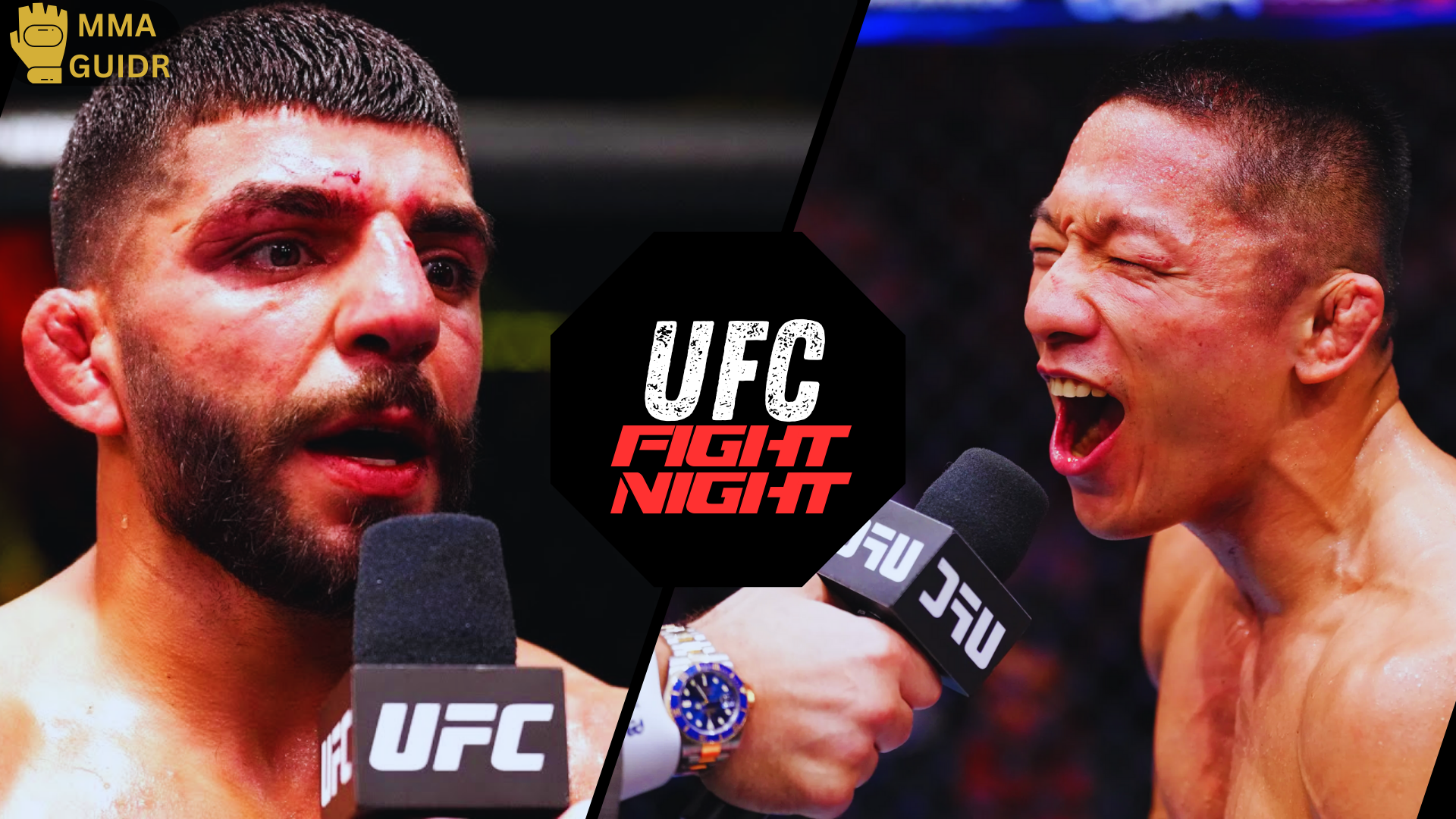
The BMF belt was never meant to be about “winning.” It was about surviving. It was about standing in the pocket when every instinct screams “retreat,” biting down on the mouthpiece, and throwing leather until one man drops. It was a prize for the reckless, the durable, and the violent.
Then came UFC 326.
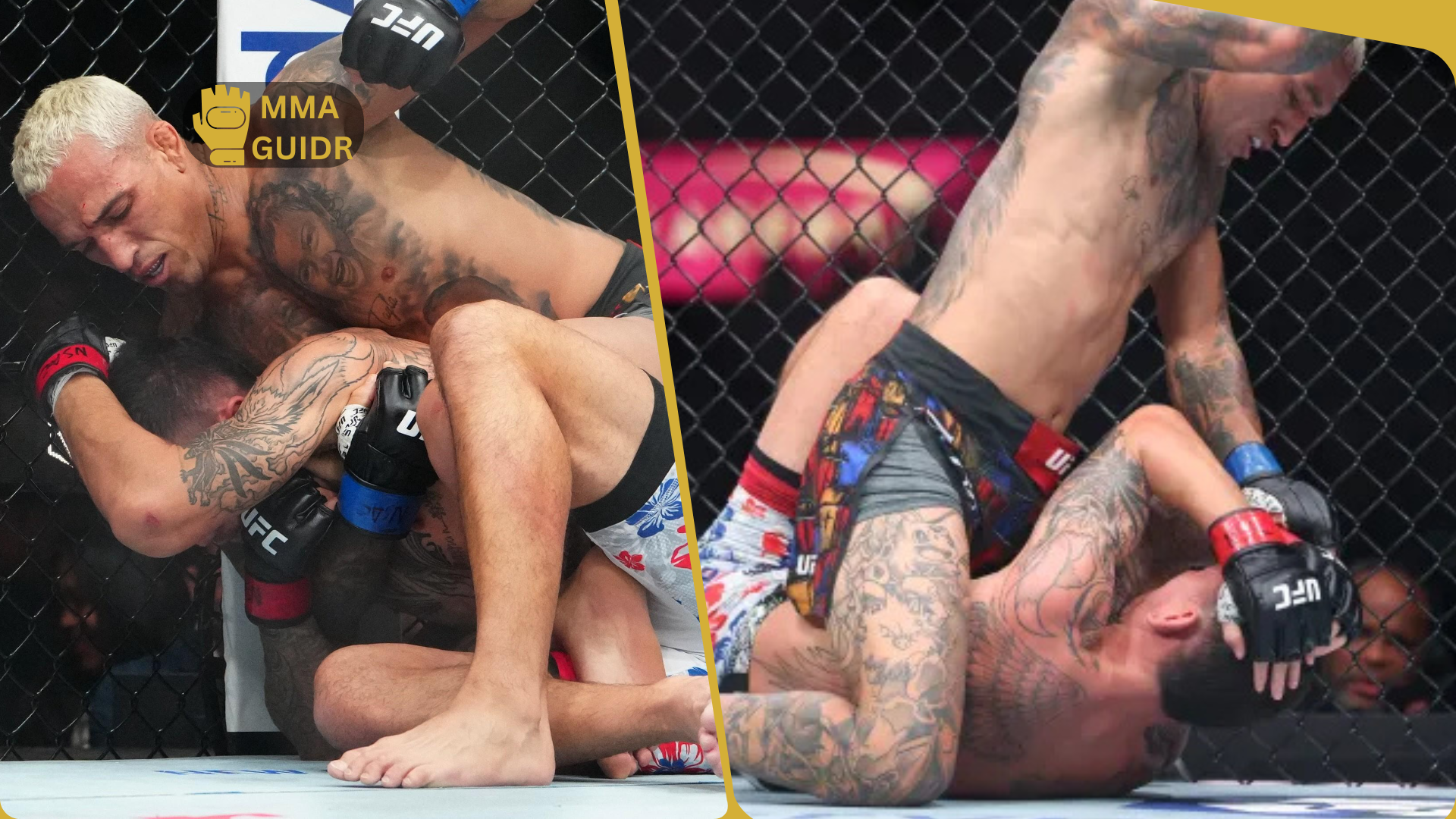
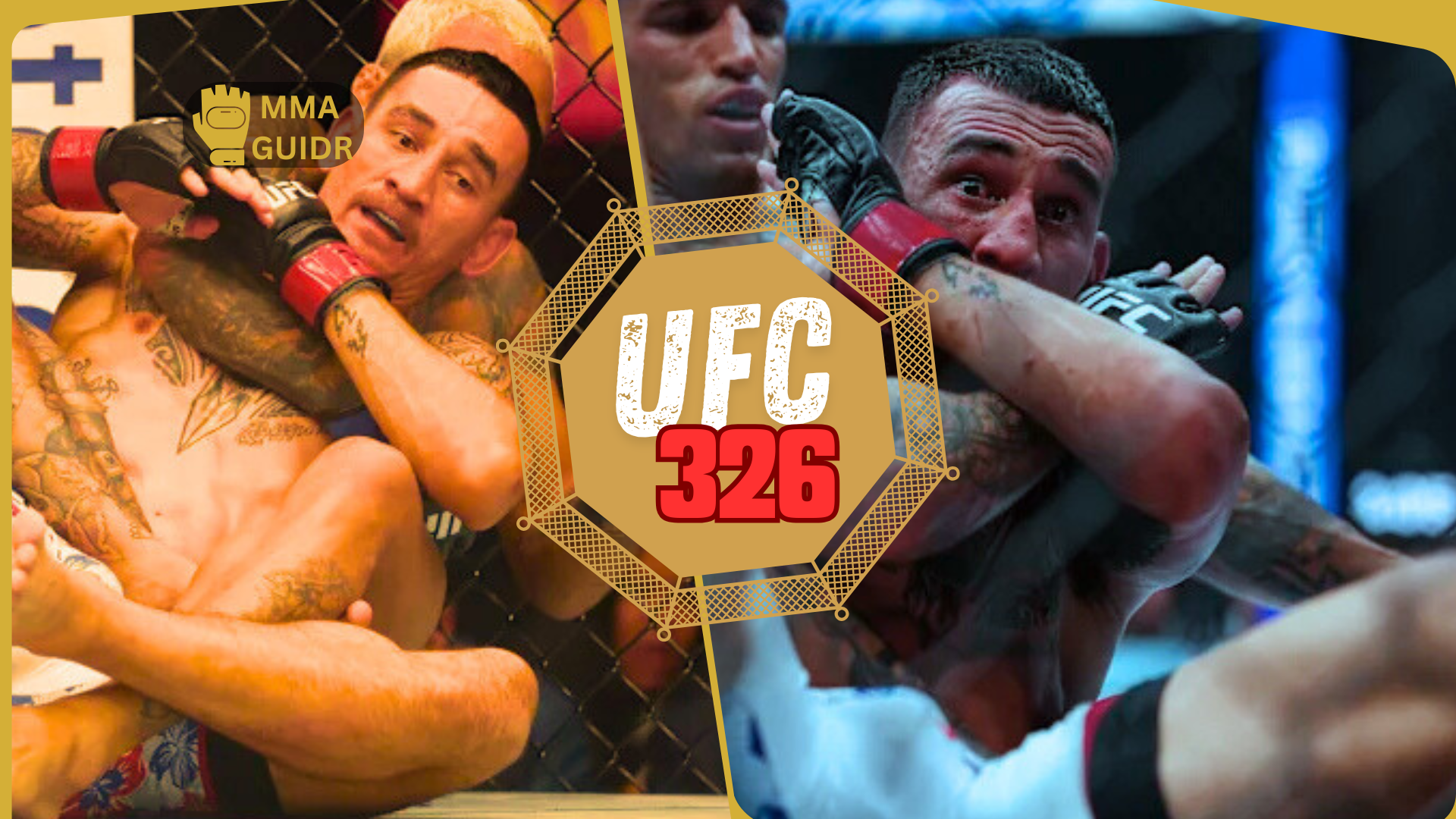
In a performance that was as tactically brilliant as it was aesthetically dull, Charles “Do Bronx” Oliveira claimed the BMF title from Max Holloway not with a highlight-reel knockout, but with 20 minutes of suffocating top control. The T-Mobile Arena, expecting a sequel to the legendary Holloway vs. Gaethje war, was instead treated to a masterclass in positional advancement and wrist control.
Oliveira’s victory was legitimate. Under the Unified Rules of MMA, he dominated. But in the context of the BMF championship—a belt forged in the fires of Masvidal vs. Diaz and consecrated by Holloway’s last-second KO of Gaethje—it felt like a betrayal. Today, we dive deep into why Oliveira’s grappling-heavy approach has triggered an identity crisis for the UFC’s most unique prize.
The Promise of Violence: What the BMF Was Supposed to Be
To understand the backlash, we have to look at the lineage. The BMF belt was birthed from a single line in a Nate Diaz post-fight interview. It was a rebellion against the sanitized, point-fighting era of MMA. It represented the “Old School”—fighters who would scrap in a parking lot for free.
- Masvidal vs. Diaz (UFC 244): A doctor’s stoppage was the only thing that could save Diaz’s eye. It was bloody, chaotic, and pure aggression.
- Gaethje vs. Poirier 2 (UFC 291): A head kick heard around the world. No wrestling, just a high-stakes game of chicken.
- Holloway vs. Gaethje (UFC 300): The gold standard. Holloway pointing to the center of the mat in the final 10 seconds to trade hooks was the definitive BMF moment.
The unspoken contract of the BMF title was simple: honor the violence. You don’t shoot for a takedown to steal a round. You don’t lay and pray. You finish or you go out on your shield.
The UFC 326 Breakdown: Smart MMA vs. BMF MMA
At UFC 326, Charles Oliveira ignored that contract. Facing one of the best boxers in UFC history, Oliveira did exactly what a smart fighter should do: he took away Holloway’s weapons.
From the opening bell, Oliveira utilized a reactive double leg takedown to ground the Hawaiian. Once on the mat, “Do Bronx” didn’t hunt for his signature submissions with his usual reckless abandon. Instead, he settled into a heavy top game, prioritizing position over submission.
The Stats That Killed the Vibe
The numbers paint a clear picture of why the crowd grew restless:
- Control Time: Oliveira racked up over 20:49 of ground control in a 25-minute fight.
- Strike Differential: While Holloway landed 63 strikes, they were mostly defensive shots from the bottom. Oliveira landed 101, but the vast majority were short elbows from guard—effective for scoring, but lacking the finishing intent of a BMF war.
- Submission Attempts: Only 4 attempts in five rounds. A stark contrast to the Oliveira who holds the UFC submission record.
Oliveira fought to win a decision. In a standard title fight, this is high-IQ fighting. In a BMF fight, it’s heresy.
The “Wet Blanket” Dilemma: Grappling Without Damage
The controversy isn’t that Oliveira grappled. A BMF can be a grappler—think of the violent ground assaults of Khabib Nurmagomedov or the bone-breaking intent of Rousimar Palhares. The issue was the style of grappling.
Oliveira used what we call “stall-tactics” in the later rounds. By keeping his head tight to Holloway’s chest and controlling the wrists, he neutralized Holloway’s ability to scramble. This is the antithesis of the evolution of ground and pound, where modern fighters usually posture up to inflict maximum damage.
When a fighter secures a dominant position like the mount or back control but refuses to risk that position to chase a finish, they are “gaming” the scoring system. As detailed in our guide on MMA scoring and judging, judges reward control time heavily when damage is equal. Oliveira knew this. He fought a “championship” fight for a belt that represents the opposite of championship structure.
Marketing vs. Reality: The Identity Crisis
The UFC has a problem. They sell the BMF belt on highlight reels of knockouts and blood-soaked canvases. They market it to the casual fan who wants to see a bar fight with gloves. But by allowing the belt to change hands via a 50-45 grappling shutout, they have turned it into just another trinket.
If the BMF title is just another belt that can be won by point-fighting, what makes it special? Why does it exist alongside the 155lb and 170lb undisputed titles?
The magic of the belt relied on the fighters policing themselves. It relied on a Justin Gaethje or a Dustin Poirier agreeing to “bang.” Oliveira, a tactician at heart, exposed the flaw in the concept: If you pay a fighter $1,000,000 to win a belt, they are going to take the path of least resistance.
Is the “Just Bleed” Era Over?
This result might signal the end of the BMF as we know it. The sport is evolving. The skill level is so high that “brawling” is becoming obsolete at the elite level. Fighters are too good at risk management.
Even the most aggressive strikers are learning that the Muay Thai clinch and cage control are safer ways to drain an opponent’s gas tank than trading hooks in the pocket. Oliveira’s performance was the final nail in the coffin of the “Just Bleed” era. He proved that even in a fight designed for chaos, order and technique will usually triumph.
For the purists, it was a beautiful display of jiu-jitsu neutralization. For the fans who bought the PPV expecting a war? It was a refund request waiting to happen.
The Future of the BMF Title
Where does the UFC go from here? There are a few options to save the belt’s mystique:
- Rule Changes: Implement modified rules for BMF fights. Yellow cards for stalling? A 10-minute first round?
- Striker-Only Matchups: Only book fighters who have zero interest in grappling.
- Retire the Belt: Admit that the BMF was a moment in time (Masvidal/Diaz) that cannot be artificially replicated.
Until then, Charles Oliveira reigns as the BMF champion. He may not be the “baddest” in the sense of reckless abandon, but he is certainly the smartest. And in the unforgiving world of Mixed Martial Arts, maybe survival is the ultimate form of toughness after all.
FAQ: The BMF Championship
What is the BMF Belt?
The BMF (Baddest Motherf*cker) belt is a symbolic championship created by the UFC. Unlike divisional titles, it is not defined by weight class but by a fighter’s reputation for toughness, violence, and exciting fights. It was first introduced at UFC 244 for the fight between Jorge Masvidal and Nate Diaz.
Who has held the BMF Belt?
Officially, the belt has been held by Jorge Masvidal, Justin Gaethje, Max Holloway, and now Charles Oliveira following his victory at UFC 326. Note that the belt is not always on the line; it is often vacated or dormant until the UFC books a specific “superfight.”
Can you win the BMF belt by submission?
Yes. There are no special rule sets for BMF fights; they follow the Unified Rules of MMA. However, fans generally expect BMF fights to be striking wars, which is why a grappling-heavy decision win (like Oliveira’s) causes controversy.
Why was UFC 326 controversial?
UFC 326 was controversial because Charles Oliveira used a “safe” grappling strategy to defeat Max Holloway. Fans and pundits felt that while the strategy was effective for winning, it violated the unwritten “spirit” of the BMF title, which prioritizes entertainment and aggression over tactical stalling.