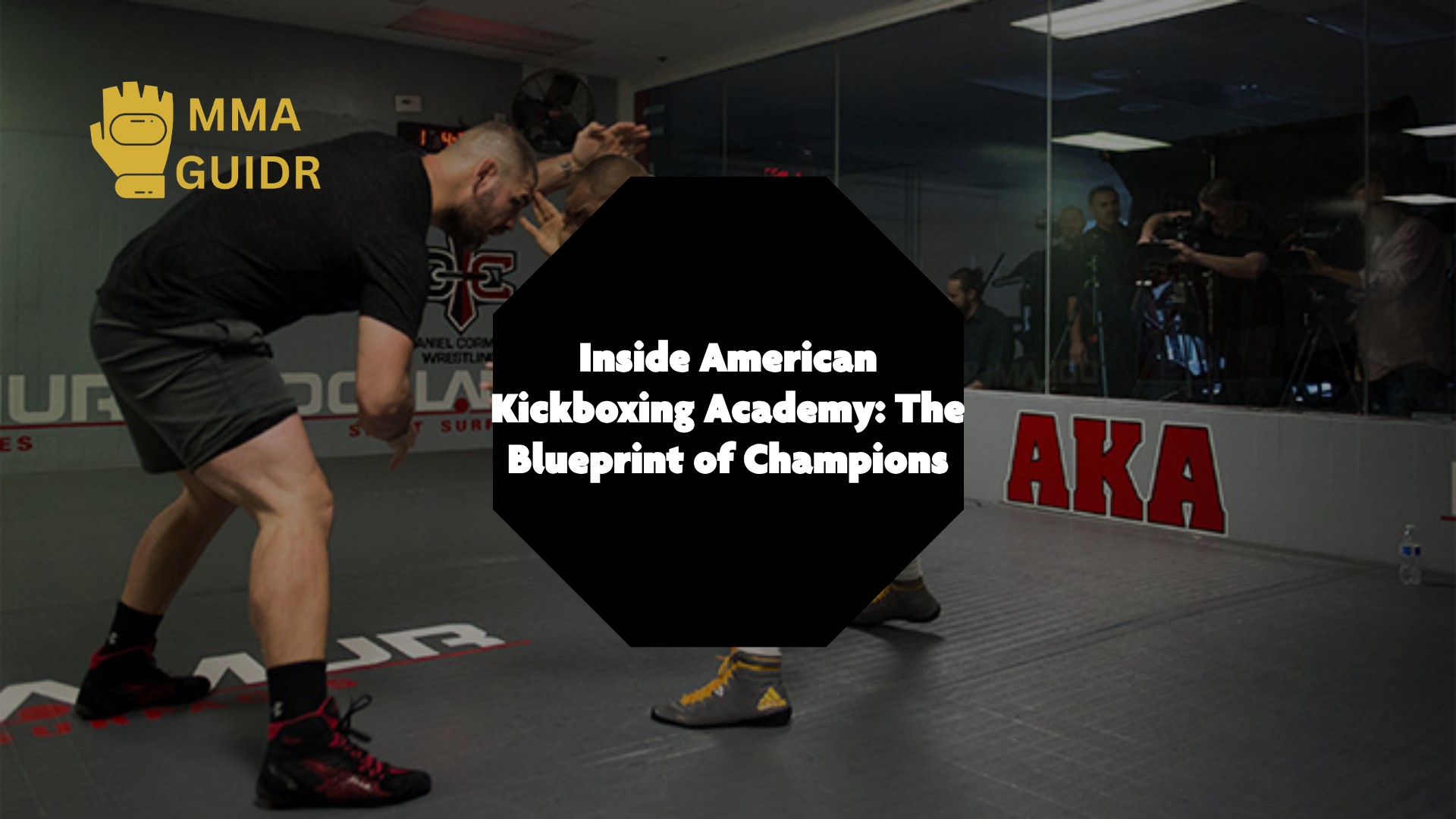
In the landscape of modern mixed martial arts, few institutions command the reverence of the American Kickboxing Academy (AKA). Nestled in San Jose, California, the gym has spent decades forging some of the most dominant fighters in the history of the sport. Yet, despite its name, AKA is not primarily known for producing pure strikers. Instead, it has earned a reputation as a grueling, wrestling-heavy powerhouse that has consistently produced multi-division champions. Through a unique blend of elite coaching, an uncompromising training culture, and a deep-rooted sense of loyalty, AKA has established a championship blueprint that continues to shape the sport.
The Origins: From Kickboxing to the Octagon
The American Kickboxing Academy was founded in 1985 by Javier Mendez, a former two-time ISKA kickboxing world champion. Originally, the facility was exactly what its name suggested: a specialized academy for kickboxers to hone their striking craft. However, as the sport of mixed martial arts began to take shape in the 1990s, Mendez recognized the shifting tides of combat sports.
Mendez’s transition into MMA coaching began in 1996 when he helped local UFC fighter Brian Johnston prepare for competition. The gym’s true breakthrough in mixed martial arts arrived in 1997 when Frank Shamrock joined the ranks. Under the guidance of the AKA team, Shamrock became the gym’s first UFC champion, signaling the beginning of AKA’s evolution from a regional striking gym into a premier MMA super camp.
An Ironic Evolution: Becoming a Wrestling Powerhouse
One of the most common misconceptions among casual MMA fans is that AKA is a striking-centric camp due to its name. In reality, the gym’s tactical identity underwent a massive shift in the 2000s, transforming into one of the most feared wrestling and top-control camps in MMA history.
This evolution was driven by an influx of elite collegiate wrestlers who sought out Mendez to develop their striking. Fighters like Jon Fitch and Josh Koscheck brought a gritty, NCAA-style wrestling room mentality to San Jose. This foundation was later perfected by heavyweights like Cain Velasquez and Daniel Cormier. The AKA style became synonymous with relentless forward pressure, chain wrestling, and exhausting top control, utilizing striking primarily to close the distance and facilitate takedowns.
The “Iron Sharpens Iron” Training Culture
At the core of AKA’s success is its legendary “iron sharpens iron” training philosophy. The gym is famous for a highly competitive, grueling sparring environment where up-and-coming prospects share the mats with established world champions. This ecosystem is overseen by Mendez, alongside long-time manager and coach “Crazy” Bob Cook, and Brazilian Jiu-Jitsu master Leandro Vieira.
Historically, AKA faced criticism from some corners of the MMA community for high injury rates and fight pull-outs, often attributed to their intense sparring sessions. However, within the gym, this environment was viewed as a necessary filter. The philosophy maintained that surviving the AKA training room forged unbreakable mental toughness and cardiovascular superiority. By the time an AKA fighter stepped into the Octagon, the fight itself was often less grueling than the preparation.
The Dagestani Connection and Tactical Synthesis
In the 2010s, AKA became the North American home for a wave of elite fighters from Dagestan, forever altering the gym’s legacy. This era was spearheaded by Khabib Nurmagomedov and later carried on by Islam Makhachev. A common misconception is that these fighters relied solely on the grappling skills they brought from overseas. In truth, their integration into AKA was a crucial tactical synthesis.
While fighters like Nurmagomedov arrived with a world-class Sambo base cultivated by his father, Abdulmanap Nurmagomedov, AKA provided the missing pieces for UFC dominance. The gym taught these athletes how to adapt their Sambo for the Octagon, focusing on:
- Cage-Wall Tactics: Utilizing the chain-link fence to trap opponents, break their posture, and secure takedowns.
- Striking Integration: Blending Mendez’s kickboxing fundamentals with relentless takedown threats to freeze opponents on the feet.
- Submission Grappling: Refining positional dominance with Leandro Vieira’s elite Brazilian Jiu-Jitsu techniques.
This cross-training ecosystem allowed fighters like Makhachev to evolve into complete mixed martial artists, capable of scoring head-kick knockouts and out-striking elite opponents just as effectively as they grappled them.
A Blueprint for Championship Gold
The effectiveness of the AKA system is best illustrated by its staggering championship pedigree. The gym has consistently produced titleholders across multiple weight classes, each utilizing the camp’s signature pressure-heavy style:
- Cain Velasquez: Captured the UFC Heavyweight Championship by combining his collegiate wrestling background with relentless cardiovascular conditioning and heavy pressure boxing.
- Daniel Cormier: Transitioned from an Olympic freestyle wrestler to a two-division UFC champion (Light Heavyweight and Heavyweight), relying on the gym’s heavy top-control game and devastating dirty boxing.
- Luke Rockhold: Won the UFC Middleweight Championship by pairing a crushing top game with dynamic, rangy kickboxing.
- Khabib Nurmagomedov & Islam Makhachev: Both captured the UFC Lightweight Championship, utilizing the seamless blend of Dagestani chain wrestling and AKA’s cage-control tactics.
Family Loyalty and Global Expansion
Beyond the tactics and the grueling sparring sessions, Javier Mendez has consistently emphasized that AKA is a “family gym” at its core. In a sport where fighters frequently bounce between camps, AKA is notable for the fierce loyalty of its athletes. Veterans like Velasquez and Cormier remained with the team throughout their entire fighting careers and seamlessly transitioned into mentorship and coaching roles to guide the next generation.
This strong cultural foundation eventually allowed the brand to expand globally. In 2014, AKA Thailand opened its doors in Phuket, co-owned by Mendez, UFC veteran Mike Swick, and Blair Speers. The expansion brought the AKA blueprint to Southeast Asia, providing a world-class training destination that maintains the same “iron sharpens iron” philosophy that built a dynasty in San Jose.